Leave Your Message
Engineered with multi-bus communication and edge telemetry, these interactive panels unify entryway security access control with centralized heating and cooling thermal regulation.
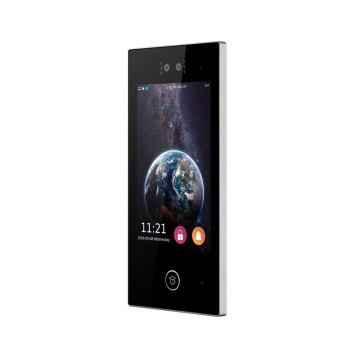
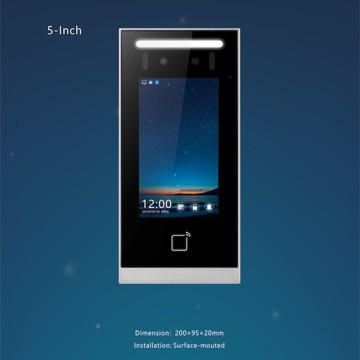
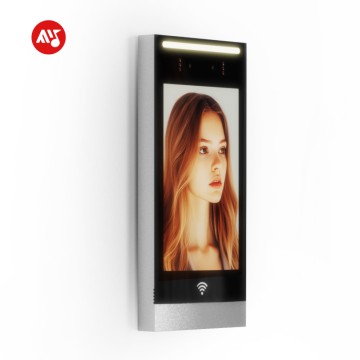
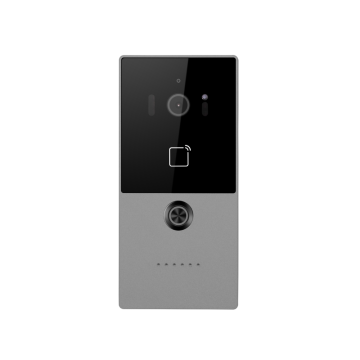
The transformation from isolated doorphone annunciators to centralized human-machine interfaces driving modern Building Energy Management Systems (BEMS).
The commercial and industrial building automation market is currently navigating an unprecedented structural convergence. Historically, architectural engineering relegated building systems into rigid, proprietary silos: the telecommunication and physical access control networks were deployed entirely separate from environmental climate regulation systems such as Variable Refrigerant Flow (VRF), hydronic central heating, and chilled-water air handling units (AHUs). Facilities managers and residential owners routinely suffered from "wall acne"—an unsightly proliferation of disparate wall-mounted units consisting of a video door phone, a separate thermostat controller, an underfloor heating dial, and supplemental ventilation touch switches.
Today, the integration of Session Initiation Protocol (SIP) Video Intercoms into Central Heating and Cooling System Temperature Regulation is disrupting this paradigm. Propelled by stringent global decarbonization mandates (such as the EU Energy Performance of Buildings Directive and ASHRAE Standard 90.1), commercial properties, multi-tenant residential complexes, and enterprise campuses are consolidating indoor hardware onto centralized, intelligent, edge-computing touchpanels. A modern SIP video intercom is no longer a passive answering station; it acts as an intelligent HMI (Human-Machine Interface) and edge gateway equipped with native Modbus, BACnet, and KNX transceivers, bridging real-time Voice-over-IP (VoIP) telecommunications directly with central HVAC thermal feedback loops.
Eliminating protocol latency by embedding native stacks for SIP (RFC 3261), BACnet/IP, and Modbus RTU/TCP over RS485 within a single high-reliability embedded system board.
Onboard temperature, relative humidity, and air quality (VOC/CO2) sensors communicate with the local Neural Processing Unit (NPU) to dynamically calculate Predicted Mean Vote (PMV) indexes.
Several market dynamics are accelerating the adoption of multi-functional SIP climate panels:
Analyzing technical topologies across commercial, residential, healthcare, and hospitality environments.
In Grade-A commercial office buildings, flexible working schedules and fluctuating tenant densities place immense strain on central chiller plants and Variable Air Volume (VAV) terminal boxes. Traditional wall thermostats measure temperature at static, often poorly positioned points, failing to adapt to rapid occupancy shifts during tenant meetings, client visits, or staggered working hours.
By positioning SIP video intercom touch stations at departmental entry portals and executive meeting rooms, the terminal functions as both a credentialed video access station and a localized climate automation hub. When an employee authenticates entry via facial recognition or an encrypted SIP video call, the intercom signals the building's central chiller via BACnet/IP to modulate cooling dampers, lowering ambient temperature by 1.5°C prior to room occupancy. Furthermore, integrated far-field microphone arrays allow occupants to enact touchless voice commands ("Set conference room cooling to 22 degrees"), eliminating physical contact while maintaining hygienic, effortless climate regulation.
High-end residential villas and multi-family residential complexes present complex thermodynamic profiles involving mixed hydronic underfloor heating, concealed ceiling ducted fan-coil units (FCUs), and fresh-air energy recovery ventilators (ERV). Managing these diverse heating and cooling mechanisms across multiple floors requires a centralized touch station that prevents contradictory system behavior—such as simultaneous radiant heating and mechanical cooling.
A flagship 10-inch smart video intercom console, installed in central living quarters, serves as the primary environmental dashboard. Utilizing native RS485 and Zigbee/KNX protocols, the intercom interfaces with multiple thermal sensors distributed across bedrooms, living areas, and home theaters. It dynamically regulates proportional motorized water valves, manages boiler water flow temperatures, and regulates inverter cooling stages based on real-time room occupancy, weather forecasting feeds retrieved over IP, and resident lifestyle presets (e.g., "Away", "Night Comfort", "Pre-Cooling").
In medical clinics, biological research facilities, and hospital cleanrooms, environmental thermal stability and sterile cross-contamination prevention are paramount. Temperature regulation in these facilities must co-exist with positive/negative air pressure control and hands-free communication between sterile and non-sterile zones.
SIP video intercom terminals built with flush glass front surfaces, IP65-rated front fascias, and antimicrobial finishes serve as the communication bridge and temperature monitoring station. Utilizing on-device NPU compute, the panel tracks real-time thermal anomalies from calibrated PT100/NTC sensors, triggering immediate SIP audio-visual emergency alarms to the central nursing station or facilities engineers if temperatures drift outside the required ±0.5°C margin. Healthcare workers in full personal protective equipment (PPE) can activate bidirectional video consultations and calibrate thermal parameters using edge voice control without touching the panel glass.
Energy management represents one of the largest operational expenditures in the hospitality sector. Unoccupied guest suites with continuous central cooling or heating lead to substantial energy waste. Integrating SIP intercoms into property management systems (PMS) transforms guest service while automating thermal conservation.
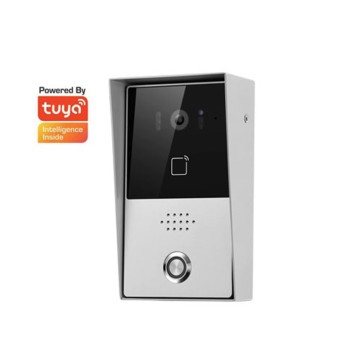
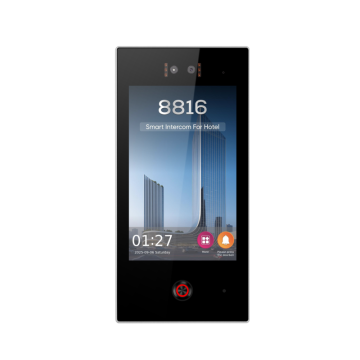
When a guest checks in at the front desk, the PMS executes a SIP registration event, switching the guest room's central hydronic or VRF cooling from an eco-standby state (26°C) down to a welcoming 21°C. Upon arrival at the suite door, the guest is identified at the compact outdoor intercom terminal (e.g., H1X or H51TYF series), unlocking the door and transitioning the suite into full welcome lighting and optimal thermal comfort mode. Throughout the stay, the intercom serves as a direct video concierge portal to hotel services while doubling as an intuitive digital room thermostat.
Leveraging edge intelligence to balance occupant satisfaction against peak thermodynamic energy efficiency.
Traditional thermostats operate on a primitive hysteresis loop: cooling or heating triggers when temperature crosses an arbitrary fixed threshold. This reactive mechanism leads to severe thermodynamic overshoot, unnecessary compressor cycles, and occupant discomfort. Integrating SIP intercoms with embedded NPUs allows for the execution of advanced thermal comfort mathematical models directly at the edge, specifically Fanger's PMV-PPD (Predicted Mean Vote / Predicted Percentage Dissatisfied) model (ISO 7730).
By computing mean radiant temperature, ambient air velocity, localized humidity, and estimated metabolic rate derived from room occupancy telemetry, the SIP intercom calculates comfort dynamically. Rather than running central heating or cooling at full blast, it modulates modulating actuator valves and inverter fan speeds, producing substantial economic benefits:
Documented average reduction in chiller and boiler electricity usage across commercial deployments through AI-driven setpoint setback schedules and occupancy-verified zone cooling.
Consolidated hardware eliminates separate thermostat wall modules, zone controllers, and sub-controllers, yielding complete hardware capital expenditure payback within 14 to 18 months.
Proportional-Integral-Derivative (PID) firmware regulation keeps indoor temperatures within ±0.3°C of optimal comfort, eliminating thermal swings and compressor wear.
Furthermore, during peak electrical grid tariff periods, the SIP video intercom acts as an OpenADR (Automated Demand Response) node. When peak tariff signals are transmitted by the regional utility provider over IP, the intercom automatically pre-cools or pre-heats building thermal mass slightly prior to peak hours, curbing peak electrical demand charges without diminishing occupant comfort.
Focused on core business domains, we provide end-to-end intelligent hardware services spanning design, R&D, and manufacturing — committed to becoming a globally leading AIoT device manufacturer and solution provider.
Pursuing lasting, reliable partnerships rather than short-term transactions. Superior delivery is our baseline; attentive service is our commitment.
Creating premium smart products for global users, delivering customized intelligent solutions, and empowering multi-industry transformation through innovation.
To become the benchmark manufacturer in global smart hardware — leveraging China's world-class technology and supply chain to make intelligent living accessible everywhere.
Six core technologies as our foundation — building competitive strength in stability, interactivity, and openness for smart intercom and HVAC thermal regulation.
Built-in dedicated NPU supporting on-device algorithm execution and edge computing. Data never leaves the device — privacy-first, with response latency <200ms.
Native mainboard support for single/dual/quad microphone array expansion with full audio capture channels — a stable hardware foundation for AI voice interaction.
Compatible with 200+ smart home platforms via standardized API interfaces, enabling rapid device onboarding into mainstream ecosystems.
Deep support for Android, Linux, and RTOS — seamlessly handling both complex systems and real-time logic requirements.
Native onboard support for CAN, SPI, DALI, RS485, I2C and more — effortlessly bridging smart home protocols, industrial PLCs, and various sensors.
Rigorously tested for wide-temperature operation and vibration resistance — meeting demanding industrial standards while exceeding consumer electronics durability benchmarks.
A multi-tiered hardware, protocol, and application framework engineered for uninterrupted building communications and mission-critical central HVAC climate regulation.
Device control, scene automation, OTA upgrades, and rich application features that meet diverse end-user needs.
Integrated local AI compute, voice processing, and image recognition — powering upper-layer applications with strong intelligence capabilities.
Built-in Zigbee, Bluetooth, Wi-Fi, KNX, and other communication protocol stacks — enabling seamless device-to-device connectivity.
Support for Android, Linux, and RTOS, providing standardized drivers and system services across all platforms.
CPU, memory, storage, and rich peripheral interfaces — delivering a powerful and stable physical foundation for the entire system.
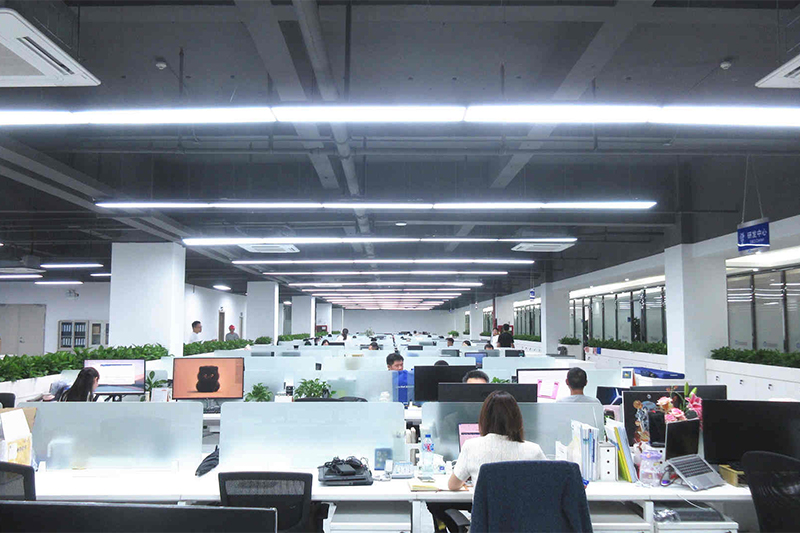
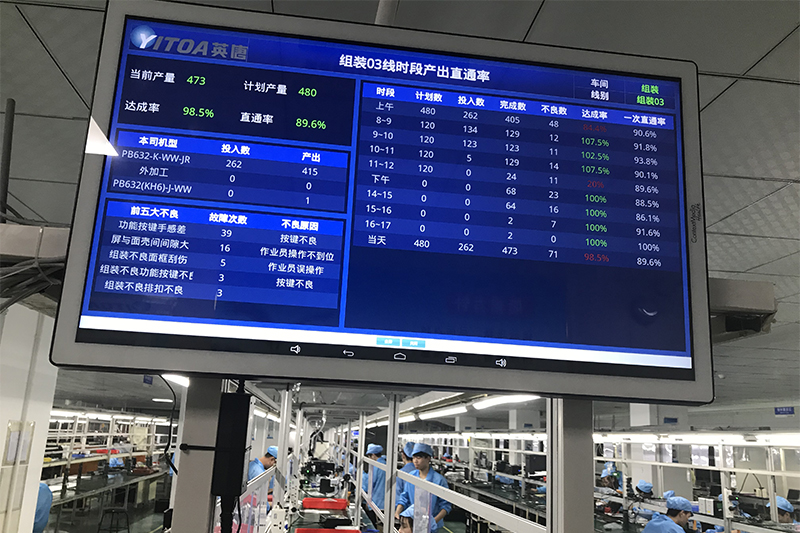
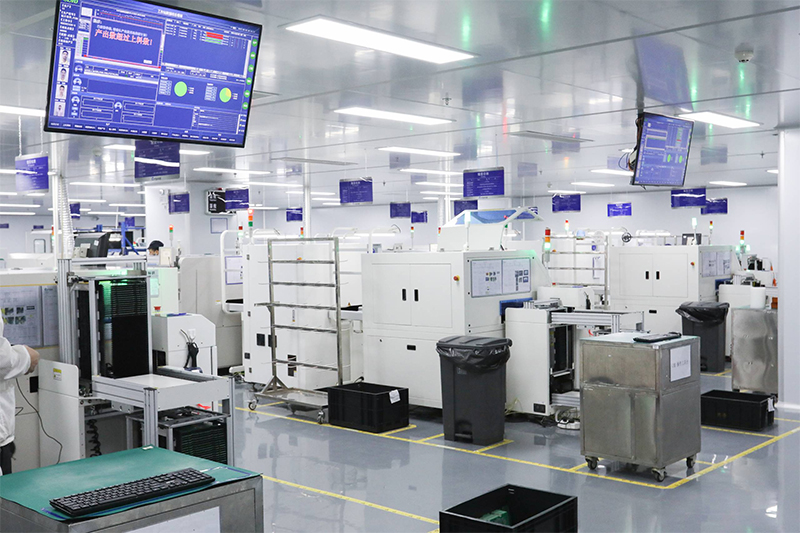
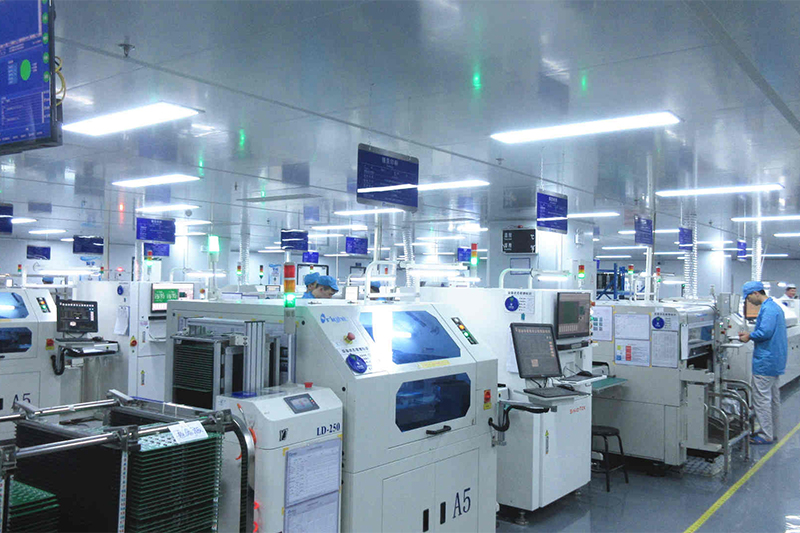
World-class production lines, automated SMT cleanrooms, and stringent quality validation guarantees industrial-grade durability for climate automation hardware.

Browse our complete catalog of commercial-grade video intercoms, outdoor access stations, and multi-zone climate regulation consoles engineered for intelligent infrastructure.