




Smart HVAC Control Panels: Everything You Need to Know
The traditional thermostat has one main job: control temperature.
Modern buildings often need more.
A room may contain air conditioning, floor heating and fresh air equipment, while the building itself may also have centralized automation.
This is where the smart HVAC control panel is becoming increasingly relevant.
What Is a Smart HVAC Control Panel?
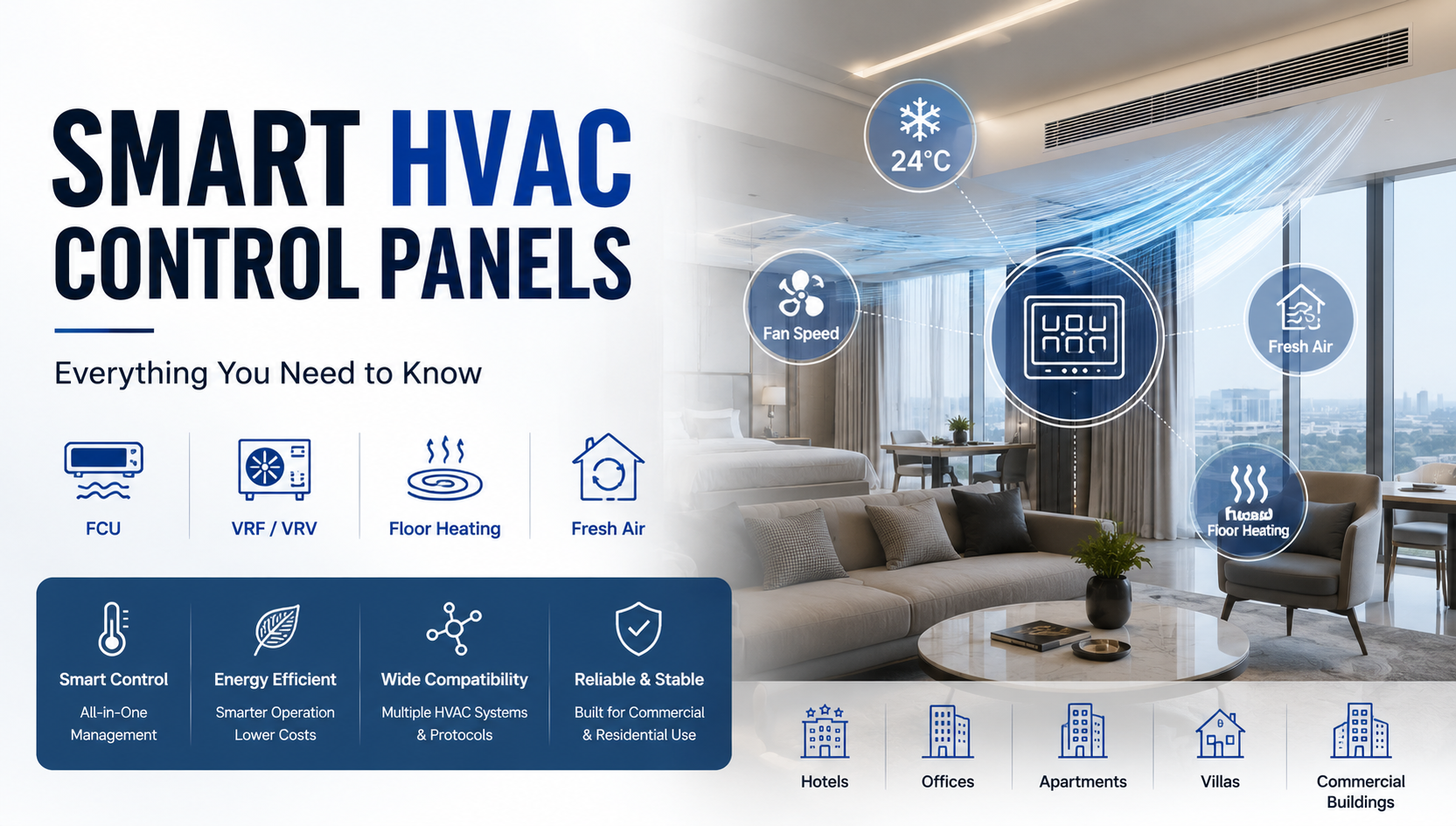
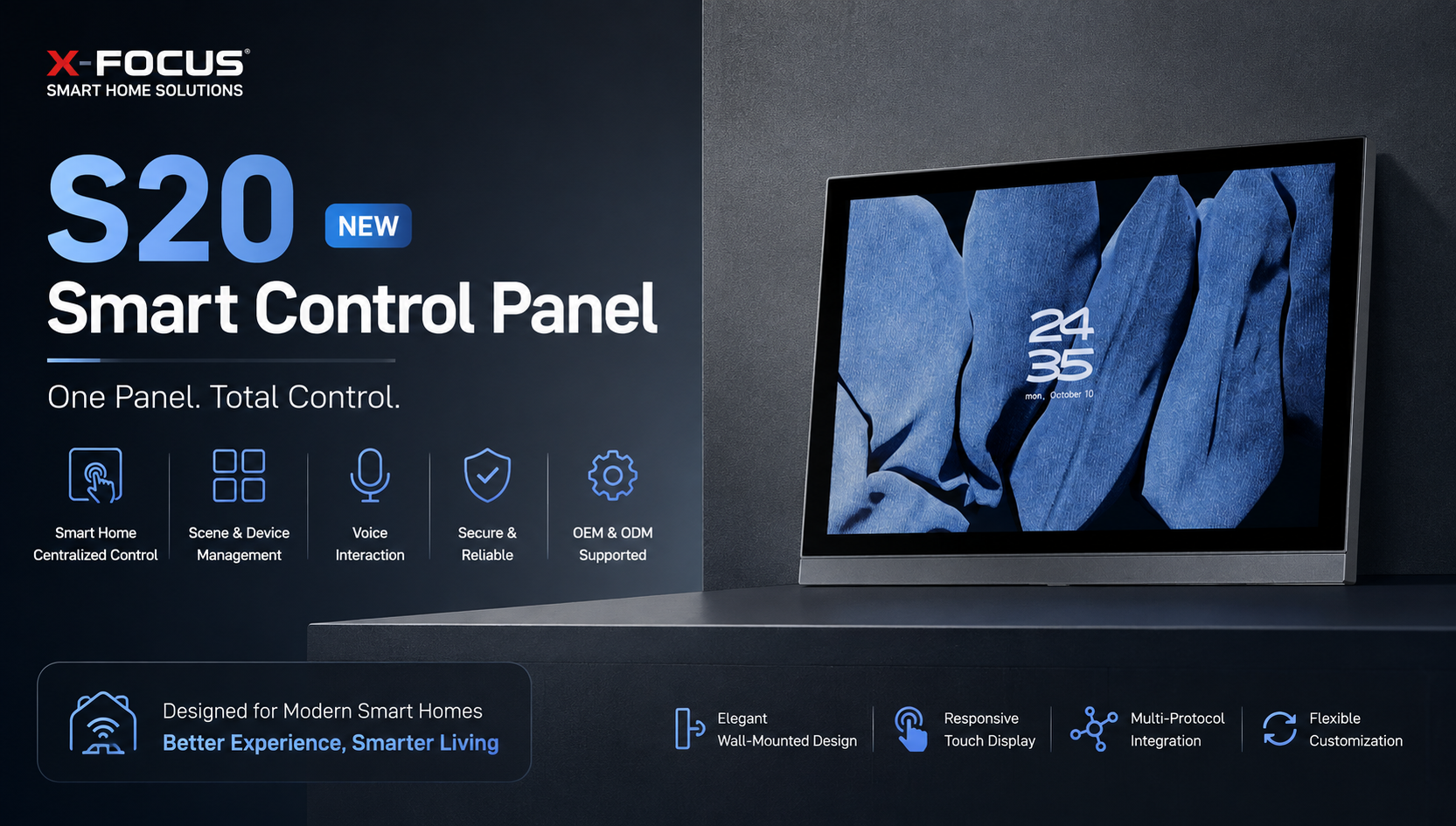
A smart HVAC control panel is a wall-mounted interface used to manage one or more climate-control systems.
Depending on the design, it can control:
- Air conditioning
- Fan coil units
- VRF/VRV
- Floor heating
- Fresh air
- Fan speed
- Operating modes
- Temperature setpoints
- HVAC scenes
Compared with a basic thermostat, the emphasis is on bringing several control functions into one interface.
Smart HVAC Panel vs Traditional Thermostat
A traditional thermostat works well when the requirement is simple.
A smart HVAC panel becomes useful when the project involves multiple systems, a more advanced UI or integration with a larger automation platform.
For hotels, villas and commercial buildings, this can significantly simplify daily operation.
FCU Control
Fan coil units are widely used in hotels, apartments and commercial buildings.
An FCU thermostat may need to control:
- Three-speed fan
- Heating/cooling valve
- Temperature
- Operating mode
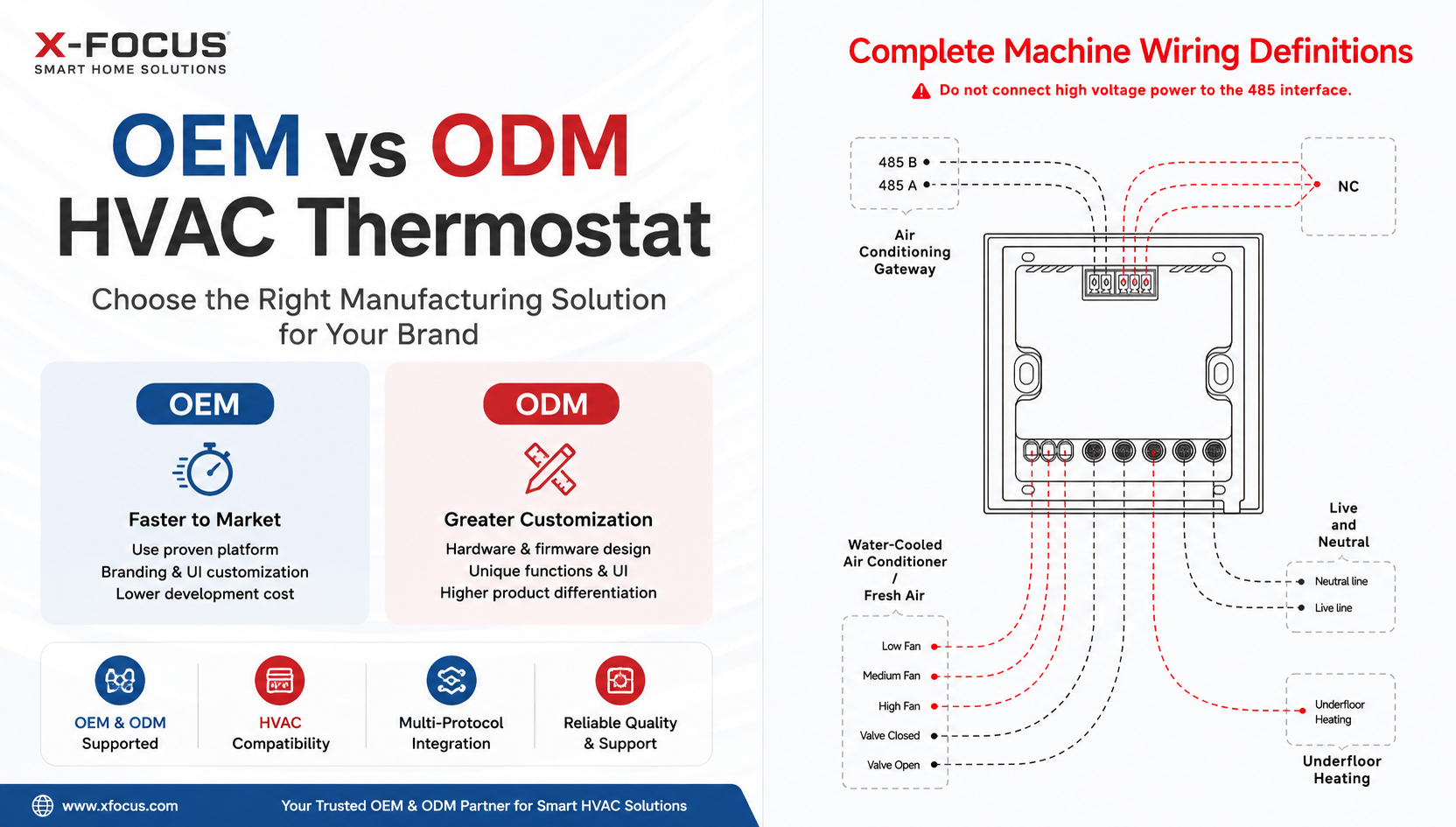
The wiring and control logic must therefore be confirmed before selecting the panel.
VRF and VRV Systems
VRF systems normally use manufacturer-specific communication.
A smart HVAC panel may communicate through an appropriate interface or gateway.
Compatibility should always be confirmed for the specific HVAC brand and model rather than assuming that every VRF system uses the same protocol.
Floor Heating and Fresh Air
Some projects combine air conditioning with floor heating and ventilation.
Using separate controllers for every system increases the number of wall devices.
A multi-function HVAC panel can provide a cleaner interface where the underlying hardware architecture supports those systems.
Communication and Integration
Professional HVAC projects may require communication with a building or Smart Home System.
Common interfaces and ecosystems can include:
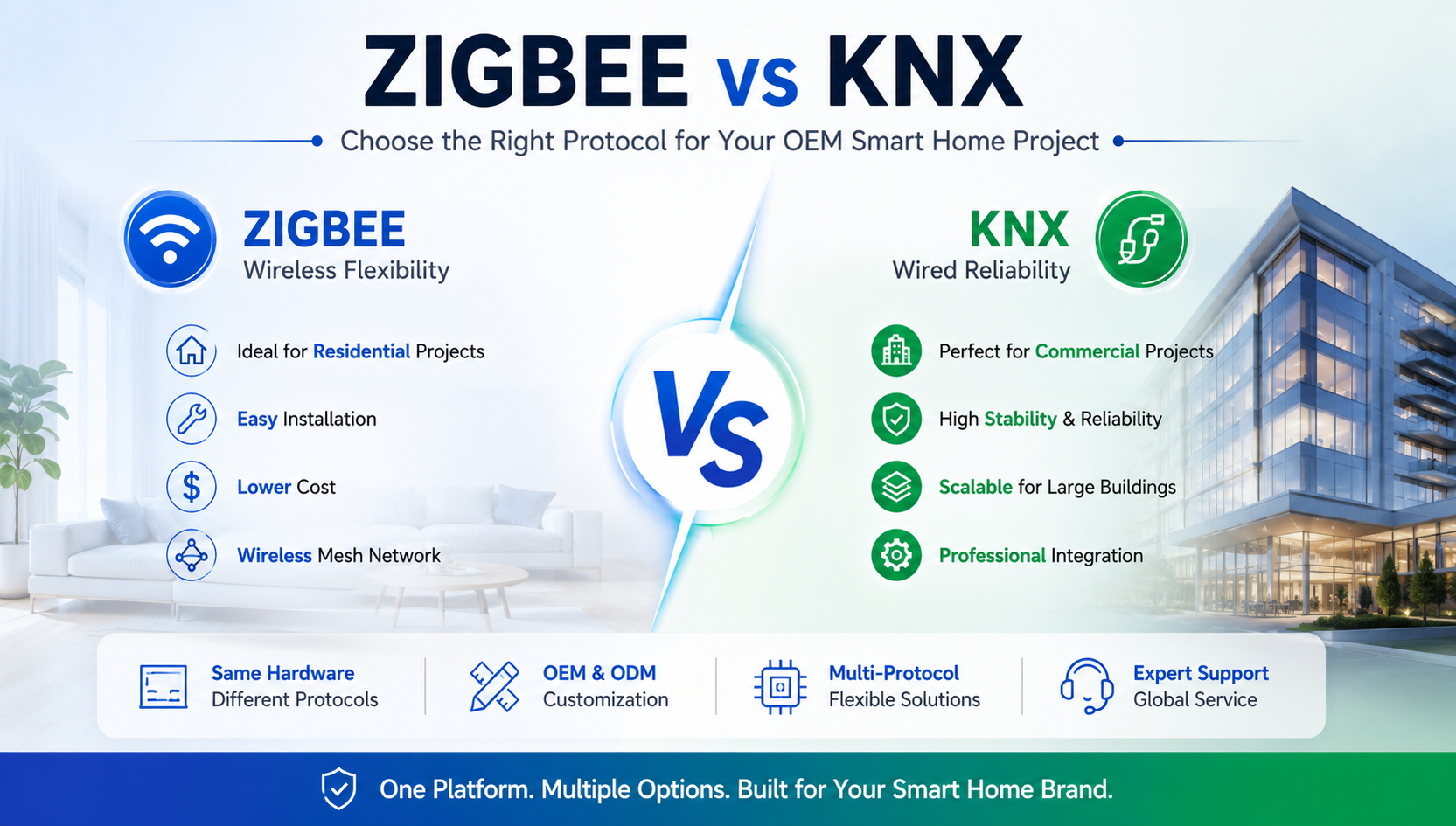
RS485, Modbus, KNX, Wi-Fi and other project-specific protocols.
The correct choice depends on the architecture of the overall system.
What Should B2B Buyers Evaluate?
For a brand or system integrator, look beyond the screen.
Confirm:
HVAC compatibility — What equipment can actually be controlled?
Interfaces — Are the required electrical and communication interfaces available?
Firmware — Can the control logic be adapted?
Integration — Is SDK/API or protocol documentation available where required?
Manufacturing — Can the supplier maintain stable production?
Customization — Can branding, UI, hardware or firmware be adapted?
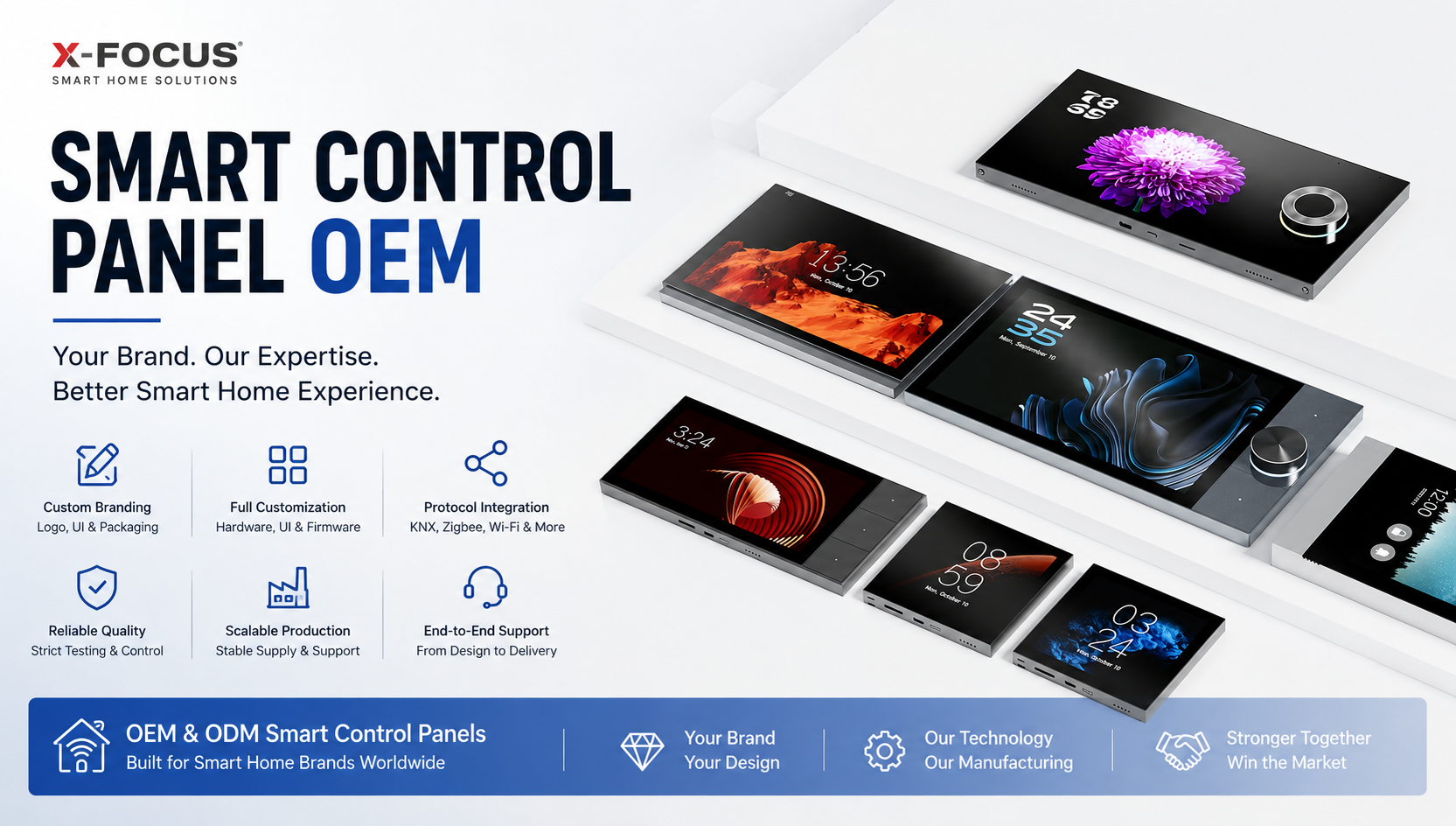
OEM HVAC Control Panels
For brands, OEM manufacturing offers an alternative to building an HVAC controller from the beginning.
An existing platform can provide a starting point while the final product is adapted to the brand’s market.
ODM is more appropriate when deeper hardware or software changes are required.
Conclusion
The right smart HVAC control panel depends on the system behind the wall.
Start with HVAC equipment and wiring. Then define communication requirements, UI and integration.
Only after those points are clear should appearance and commercial terms become the deciding factors.
Keywords
Smart HVAC Control Panel, HVAC Control Panel, HVAC Control System, HVAC Control Panel Manufacturer, Smart Thermostat, HVAC Thermostat, FCU Thermostat, VRF Thermostat, HVAC Touch Screen, Commercial HVAC Control, Building HVAC Control, OEM HVAC Control Panel