Picking the right Whole Home Audio supplier in China isn’t just about comparing prices in their catalogs. For global buyers like us, it’s really about finding systems that sound reliable, software that actually works smoothly, responsive engineering support, and clear, straightforward export docs. Let's be honest — a shiny showroom can hide some practical issues that might pop up later.
So, I put together this guide, “China’s Top 10 Whole Home Audio Suppliers for Global Buyers,” to help out from a buyer's perspective. I look at things like the variety of products, support for installation, options for customization, how they handle quality control, and how well they communicate. It covers audio systems for all kinds of spaces — villas, apartments, hotels, retail spots, and smart homes. Companies like Edifier, Fenda, DSPPA, Tonly Electronics, Sanway, and Tonewinner each bring their own strengths. Some focus mainly on residential speakers, while others offer amplifiers, multi-room controllers, or more professional gear.
But here’s the thing — real project experience really matters. Something might sound super impressive in a showroom, but once it’s installed inside a concrete villa, things can change quite a bit. Wi-Fi coverage, ceiling height, cable routing, heat management, and even the stability of your app all come into play. So, it’s a good idea to ask for current certifications, factory videos, samples for testing, warranty info, and details about how they handle integration — and don’t be shy about asking for straight-up answers.
Of course, rankings can be helpful, but keep in mind — they’re not set in stone. Supplier capabilities can shift with new models, staff changes, or different production schedules. Also, some information you see publicly might need independent verification. That’s just part of being cautious. The smart buyer compares samples, checks the packaging, tests the firmware, and makes sure after-sales support is solid. The best partner isn’t always the biggest company. It’s the one that communicates clearly and consistently delivers on performance, no matter what phase the project’s in.
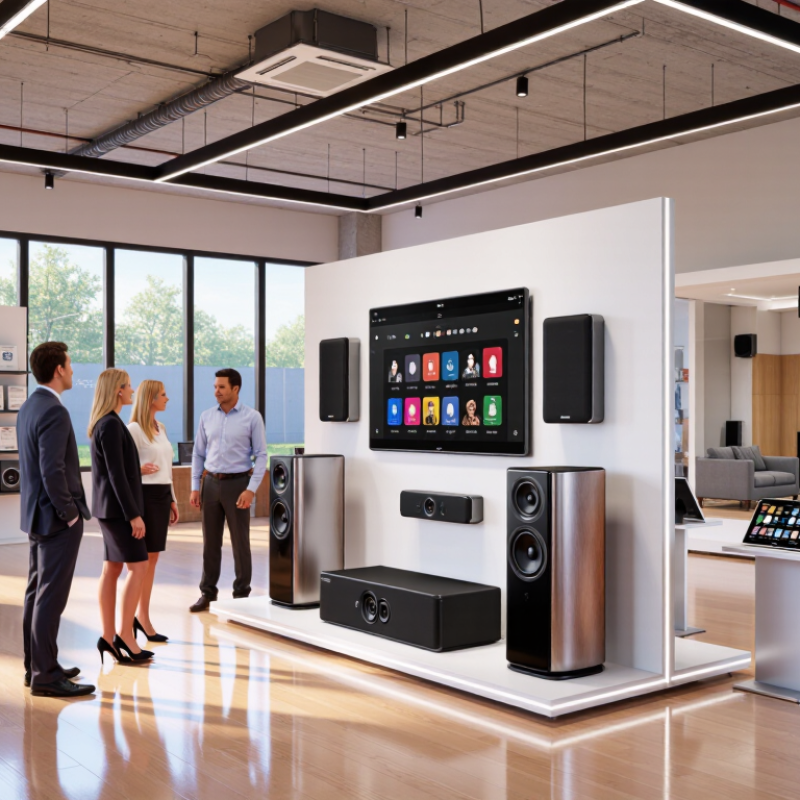
China’s Whole Home Audio suppliers provide more than speakers and amplifiers. Many offer complete systems for living rooms, bedrooms, kitchens, patios, and commercial spaces. Their packages may include ceiling speakers, wall panels, multi-zone amplifiers, network streamers, control keypads, and mobile applications. Suppliers usually support OEM and ODM projects. They can adjust cabinet sizes, connector layouts, logos, and software interfaces for different markets.
Experienced suppliersnormally begin with room plans and listening requirements. They calculate speaker coverage, amplifier power, cable distance, and zone separation. Some provide wiring diagrams, installation manuals, sample units, and remote technical guidance. They may also support integration with lighting, screens, or Home Automation Systems. Ask for frequency response data, distortion figures, safety documents, and test reports. Clear documentation often reveals more than attractive product photos.
Quality control can include aging tests, impedance checks, acoustic measurements, and packaging inspections. Reliable factories explain their sampling process and production tolerances. They should also discuss minimum order quantities, spare parts, lead times, and warranty handling. A low quotation is not always a lower total cost. Weak instructions can create expensive installation problems. I have seen promising systems need extra calibration after delivery. That is a useful warning. Request a working sample before approving a large order, and test the application, grouping functions, voice clarity, and network stability in realistic rooms.
Selecting China’s top 10 Whole Home Audio suppliers requires more than comparing online catalogs. I examine factory experience, engineering capability, production consistency, and export records. A reliable supplier should provide clear acoustic specifications, wiring diagrams, test reports, and realistic delivery dates. Factory visits can reveal details that websites hide, such as unfinished samples or crowded testing areas.
I also compare product samples in real rooms. A kitchen, hallway, and bedroom expose different sound problems. I check volume balance, connection stability, heat control, and installation access. Communication matters too. Technical answers should be specific, not copied from a sales sheet. After-sales support, spare-part availability, packaging strength, and response time deserve equal attention. My selection process is practical, but not perfect. One successful sample cannot prove long-term quality.
Tips: Request several samples before signing a large order. Ask for inspection photos, production schedules, compliance documents, and references from similar markets. Confirm whether custom software, logos, or packaging affect the minimum order quantity. Calculate landed costs, including shipping, duties, installation tools, and possible replacement units. Small omissions can become expensive later.
China’s Whole House Audio Systems supply base now serves apartments, villas, hotels, and commercial spaces. The ten supplier profiles reveal different strengths: OEM manufacturing, private-label design, network amplifiers, ceiling speakers, outdoor audio, smart-home integration, and project installation. Some focus on low-volume customization. Others operate large automated factories with export teams.
Grand View Research valued the global smart-home market at about US$154 billion in 2023. This growth supports demand for synchronized audio, but supplier quality still varies. The ten profiles should be judged through measurable evidence: factory audits, ISO-certified processes, acoustic test reports, app compatibility, and documented after-sales response times. One supplier may provide excellent speaker clarity but weak software support. Another may offer polished control systems but limited customization. That trade-off deserves attention.
Tips: Ask for a complete sample room, not one speaker. Test music, speech, Wi-Fi recovery, and volume balance across rooms. Request THD, frequency-response, warranty, and spare-parts data. Confirm whether firmware updates remain available after delivery. Industry experience also shows that shipping cartons, connector quality, and installation guides can decide project success. These details look minor. They are not.
Futuresource Consulting’s connected-audio research highlights continued growth in networked listening and smart-device adoption. However, forecasts do not replace field testing. Global buyers should compare ten supplier profiles against real project conditions, local electrical standards, language needs, and installer capability. A cheaper quotation can become expensive when commissioning takes two extra days. That remains an easy mistake to underestimate.
| Profile | Primary Manufacturing Region | Whole-Home Audio Scope | Typical Product Portfolio | Business Model | Customization Support | Common Compliance Documentation | Export Readiness | Best Fit for Global Buyers |
|---|---|---|---|---|---|---|---|---|
| Supplier Profile 01 | Guangdong | Multi-room distributed audio and residential installation systems | In-ceiling speakers, in-wall speakers, amplifiers, zone controllers | OEM and ODM manufacturing | Logo, enclosure, packaging, wiring and system configuration | CE, RoHS and EMC documents available by model | Strong experience with container and mixed-SKU export orders | Distributors, installers and private-label projects |
| Supplier Profile 02 | Shenzhen, Guangdong | Networked audio, app control and smart-home integration | Wi-Fi speakers, streaming amplifiers, network audio zones | Technology-focused OEM and project supply | Firmware, control interface, industrial design and packaging | RoHS, CE, FCC and wireless test reports by configuration | Suitable for international e-commerce and system integrators | Smart-home dealers and connected-home solution providers |
| Supplier Profile 03 | Dongguan, Guangdong | Architectural audio for new-build and renovation projects | Flush-mount speakers, outdoor speakers, subwoofers and accessories | OEM, ODM and contract manufacturing | Grille finish, mounting dimensions, drivers and acoustic tuning | CE, RoHS, REACH and product safety files where applicable | Well suited to palletized international shipments | Custom installers, construction suppliers and hospitality projects |
| Supplier Profile 04 | Ningbo, Zhejiang | Residential audio hardware and installation accessories | Ceiling speakers, wall speakers, volume controls and brackets | Volume production and private-label supply | Packaging, cosmetic finishes and selected hardware changes | CE and RoHS commonly supplied for applicable products | Competitive for consolidated sea-freight orders | Importers seeking cost-efficient installation products |
| Supplier Profile 05 | Guangzhou, Guangdong | Commercial and residential zone amplification | Multi-zone amplifiers, mixers, paging equipment and controllers | Project-based OEM and professional audio supply | Control logic, front-panel design, firmware and input configuration | CE, EMC, RoHS and safety reports according to destination market | Experienced in system quotations and technical export support | Hotels, restaurants, villas and audio contractors |
| Supplier Profile 06 | Xiamen, Fujian | Outdoor and moisture-resistant whole-home audio | Garden speakers, patio speakers, landscape subwoofers and amplifiers | OEM and specialized product development | Weather-resistant materials, colors, mounting systems and labels | IP-rating test evidence, CE and RoHS where applicable | Suitable for overseas landscape-audio distributors | Outdoor living, resort and premium residential projects |
| Supplier Profile 07 | Huizhou, Guangdong | Wireless residential audio and compact zone systems | Bluetooth speakers, wireless amplifiers, soundbars and compact speakers | Consumer-electronics OEM and private-label production | Battery, enclosure, user interface and packaging customization | CE, FCC, RoHS and battery transport documents when required | Appropriate for retail, online and regional distributor channels | Retailers and brands requiring compact wireless products |
| Supplier Profile 08 | Hangzhou, Zhejiang | Software-enabled audio control and connected-device integration | Network players, control gateways, streaming devices and amplifiers | Technology partnership and solution integration | API integration, mobile interface, firmware and cloud configuration | Wireless, EMC, CE, FCC and RoHS documentation by market | Best for buyers requiring technical pre-sales support | Smart-home integrators and connected-building developers |
| Supplier Profile 09 | Foshan, Guangdong | Interior-friendly audio for residential construction and furniture projects | Invisible speakers, slim speakers, ceiling speakers and custom grilles | OEM, ODM and architectural project supply | Dimensions, grille appearance, acoustic materials and installation details | CE, RoHS and performance test reports where applicable | Requires project drawings and technical confirmation before production | Interior designers, developers and high-end installers |
| Supplier Profile 10 | Zhongshan, Guangdong | Entry-to-mid-range distributed audio for residential and light commercial use | Ceiling speakers, wall speakers, compact amplifiers and accessories | Cost-focused OEM and export manufacturing | Packaging, labels, connector options and selected cosmetic changes | CE, RoHS and basic EMC documentation by product model | Suitable for standard export orders and distributor replenishment | Regional wholesalers, installers and value-oriented retailers |
Note: Supplier profiles are anonymized for comparison. Certification scope, specifications, customization terms and export capabilities should be verified against current model-specific documents before purchasing.
China’s top whole-home audio suppliers serve residential developers, integrators, and private buyers. Their product ranges often include ceiling speakers, wall-mounted speakers, subwoofers, amplifiers, network streamers, and control panels. Many suppliers provide custom cabinet finishes and adjustable speaker grilles. This helps systems match wood ceilings, stone walls, or compact apartments.
Their key technologies support Multi Room Home Audio Systems across kitchens, bedrooms, patios, and entertainment rooms. Wired systems commonly use multi-channel amplifiers, zone controls, and stable Ethernet connections. Wireless models may support Wi-Fi, Bluetooth, and app-based scheduling. Some suppliers also offer PoE audio, voice control integration, DSP tuning, and automatic room correction. Outdoor products usually include sealed housings and moisture-resistant materials. Small details matter. A poorly matched amplifier can create heat, distortion, or weak bass.
Experienced buyers should request wiring diagrams, impedance data, frequency-response charts, and sample units. Factory audits and production videos can reveal more than polished catalogs. Ask for safety and electromagnetic compatibility test reports for the target market. Supplier communication is another practical test. Can the technical team explain latency between rooms? Can they replace a damaged grille quickly? Not every supplier documents firmware updates clearly. I would also test the mobile application before placing a large order. A beautiful interface may still freeze during daily use. Pricing looks attractive, but installation support, spare parts, and warranty response deserve equal attention.
When comparing China’s top Whole Home Audio suppliers, judge quality through repeatable tests, not polished catalog images. Request a matched sample set and play the same tracks in a 20–30 square meter room. Listen for vocal clarity, bass control, cabinet vibration, and volume consistency between rooms. Check frequency response data, distortion figures, connector quality, and amplifier heat after several hours. A supplier that answers technical questions with measurements usually deserves closer attention. Still, test reports can be incomplete.
Pricing needs a wider view than the factory quote. Calculate the speaker, amplifier, control software, packaging, tooling, spare parts, shipping, and installation support. Ask for prices at several order volumes, such as 50, 200, and 500 units. Confirm minimum order quantities and warranty responsibilities in writing. A low unit price may hide expensive firmware changes or weak after-sales support. This is where many comparisons become misleading. I would also request a pilot order before committing to a large shipment.
Customization can range from a logo and grille color to a complete acoustic redesign. Clarify whether the supplier can adjust enclosure materials, driver sizes, room-zone control, wireless protocols, and user interfaces. Ask who owns the modified drawings and software access. Require a prototype approval process with documented sound targets. One overlooked detail is replacement compatibility after two years. Suppliers should explain component availability and repair procedures. The strongest evaluation combines factory visits, sample testing, production records, and clear communication, although no checklist can remove every sourcing risk.
Buying an Entire Home Audio System from China requires more than comparing factory prices. Global buyers should verify the supplier’s legal registration, production capability, and export experience. Request recent factory videos, product testing records, and references from similar projects. A polished catalog can still hide weak quality control.
Ask for a complete specification sheet before discussing payment. Check amplifier power, speaker impedance, wireless standards, voltage range, and control compatibility. Request samples and test them in several rooms, not only in a quiet showroom. Listen for distortion at higher volume. Also review packaging, labeling, manuals, warranty terms, and spare-part availability. Compliance documents must match the destination market. Confirm inspection rights, production lead time, minimum order quantity, and shipping responsibilities in writing. Small details often become expensive later.
Tips: Start with a sample order. Use an independent inspection service before shipment. Ask who handles software updates and technical support. Keep communication records. Do not trust promises alone. I have seen buyers focus on sound quality and overlook replacement cables, which caused avoidable delays. A supplier may appear responsive before payment, then become slower afterward. Build protection into the contract, even if the process feels cautious.
They often provide ceiling speakers, wall speakers, subwoofers, amplifiers, streamers, and control panels. Some also offer mobile applications and outdoor audio units. Packages may cover bedrooms, kitchens, patios, and commercial rooms.
Yes, many suppliers support OEM and ODM projects. They may adjust cabinet sizes, grille colors, connector layouts, logos, and software interfaces. Custom acoustic changes need prototype approval. Small details matter.
Request matched sample units and test them in a realistic room. A 20–30 square meter room works well for comparison. Listen for clear vocals, controlled bass, cabinet vibration, and balanced volume. Play identical tracks through every sample.
Ask for wiring diagrams, impedance data, frequency-response charts, distortion figures, and installation manuals. Safety documents and electromagnetic compatibility reports may also be necessary. Test reports can be incomplete. Check the details.
Wired systems may use multi-channel amplifiers, zone controls, and Ethernet connections. Wireless systems may support Wi-Fi, Bluetooth, scheduling, and application-based control. Some systems include PoE audio, voice-control integration, DSP tuning, or room correction.
Calculate the complete cost, not only the factory quotation. Include speakers, amplifiers, software, packaging, tooling, spare parts, shipping, and installation support. Request prices for different quantities, such as 50, 200, and 500 units. A low unit price can mislead.
A pilot order exposes problems before a large shipment. Test application stability, room grouping, voice clarity, network performance, and amplifier heat. Use the system for several hours. Real rooms reveal weaknesses.
Confirm minimum order quantities, lead times, spare parts, warranty handling, and firmware updates. Ask how damaged grilles and failed components are replaced. Check whether parts remain compatible after two years. This risk is easy to overlook.
Look for sealed housings and moisture-resistant materials. Confirm the intended outdoor conditions and installation method. Test connectors, cable protection, and sound consistency near walls or covered patios. Marketing photos are not enough.
This article presents a practical guide to China’s leading Whole Home Audio suppliers for global buyers. It explains what these suppliers typically provide, including multi-room audio systems, networked amplifiers, ceiling and wall-mounted speakers, control platforms, and installation accessories. The selection process focuses on manufacturing capability, product reliability, technical support, certifications, export experience, customization capacity, and customer service rather than brand recognition alone.
Each supplier profile highlights its main product categories, system technologies, and potential application scenarios, helping buyers understand differences in performance and integration options. The article also offers a framework for comparing sound quality, pricing, minimum order quantities, lead times, warranty policies, and private-label or project-based customization. Before placing an order, buyers should verify technical specifications, sample quality, compliance documents, communication protocols, software compatibility, packaging standards, after-sales support, and payment and delivery terms. This approach can reduce purchasing risks and support the selection of a suitable long-term manufacturing partner.