Leave Your Message
So you're on the hunt for a Smart Control Panel OEM partner? Honestly, it's way more than just comparing unit prices. I mean, sure, the price tag matters, but things like MOQ, samples, lead times, and production requirements? They can seriously affect your launch risk, cash flow, and how consistent your product turns out. A good supplier should walk you through every step—from design review all the way to final inspection—without leaving you guessing. If they can't explain it clearly, that's a red flag, you know?
So, the MOQ really depends on a few things like tooling, how big the display is, which processor you pick, and what you're making the enclosure out of. You might be able to get a small pilot order through, but honestly, that's going to jack up the per-unit price. Before you commit, you'll definitely want to check the samples—make sure the touchscreen responds well, the brightness is right, wiring's all good, firmware behaves, and the mounting lines up perfectly. If you're thinking about picking up an Android Smart Home Control Panel, there are a few things you'll want to look into first—like whether it'll actually play nice with your existing setup, how snappy the apps run on it, how often and how easily it gets updates, and honestly, whether your Wi-Fi can keep up with it without dropping the connection every five minutes.
You know, lead times are one of those things that really need some practical detail. A sample might take anywhere from two to four weeks, and then after you get the approval, mass production can tack on several more weeks. Of course, these estimates aren't set in stone—they can shift if components get allocated late or specs change at the last minute. But hey, that just happens.
Alright, so when we talk about production requirements, you've got to have drawings, interface definitions, packaging instructions, quality standards, and approved reference samples – the whole shebang. Now, experienced OEM teams usually run through engineering validation, aging tests, and documented inspections before anything ships. But here's the thing: even a super detailed spec can miss real-world installation issues. Things like wall depth, cable access, or reflected light might only pop up once you're actually testing in the field.
Honestly, a good supplier should be totally open to these questions, not just hiding behind a quote. You've got every right to ask about their sample schedule, how they handle BOM reviews, what their quality checkpoints look like, and even past corrective-action records. Clear communication goes a long way, even if perfect certainty isn't really a thing in this industry.
Now, the thing is, this guide isn't just theory—it digs into the real decisions behind Smart Control Panel OEM projects. It's all about helping you size up suppliers with actual evidence, spot the avoidable delays before they bite, and sketch out a production plan that actually makes sense in the real world.
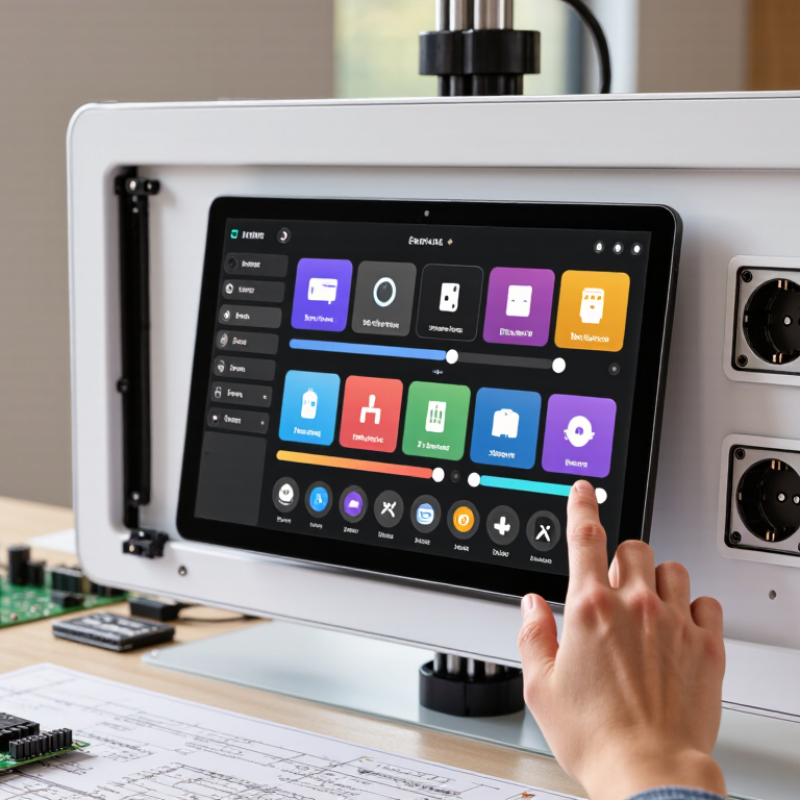
For Smart Control Panel OEM projects, MOQ usually sits between 100 and 1,000 units. The exact figure depends on enclosure tooling, display size, communication modules, and testing requirements. A 100-unit order suits a pilot, regional launch, or field validation. At this volume, unit costs are higher because setup, programming, and inspection expenses spread across fewer panels. A 1,000-unit order often supports better component pricing, but it also increases inventory risk.
Samples should be approved before production quantities are released. One functional sample checks wiring, screen response, button feel, and mounting holes. A small pilot batch, often 20 to 50 units, reveals issues that one sample can hide. We have seen minor connector changes delay assembly when drawings were not updated. That lesson sounds obvious, yet it is frequently missed. Keep revision numbers on every file.
Lead times commonly range from four to twelve weeks after final approval and material confirmation. Custom housings, certification testing, and scarce chips can extend the schedule. Buyers should provide annual demand, forecast changes, packaging details, and acceptance criteria. Suppliers should confirm yield targets, burn-in duration, spare-unit policy, and inspection records. A realistic MOQ discussion balances cash flow, production stability, service parts, and the cost of being wrong.
| Order Profile | Typical MOQ | Recommended Sample Qty. | Sample Lead Time | Mass-Production Lead Time | Typical Configuration | Main Production Requirements |
|---|---|---|---|---|---|---|
| Prototype Validation | 1–5 units | 1–3 units | 7–15 working days | Not applicable | Standard enclosure, display, basic buttons, preliminary PCB | Functional drawings, electrical schematics, interface requirements and initial firmware specification |
| Engineering Sample | 5–20 units | 3–5 units | 15–25 working days | 30–45 working days | Custom PCB layout, touchscreen or LCD, wired communication interface | Approved BOM, 2D/3D enclosure files, component specifications, test points and firmware build |
| Pilot Production | 50–100 units | 5–10 units | 20–30 working days | 35–50 working days | Production-intent PCB, molded or machined housing, assembled control interface | Golden sample approval, inspection criteria, packaging artwork and pilot test report |
| Small Commercial Order | 100–300 units | 5–10 units | 20–30 working days | 30–45 working days | Configured display panel, custom labels, communication ports and tested firmware | Released manufacturing files, incoming inspection standards, functional testing and traceability plan |
| Standard OEM Program | 300–500 units | 5–10 units | 15–25 working days | 25–40 working days | Customized front panel, repeatable PCB assembly, programmed controller and finished enclosure | Locked BOM, production test fixture, quality control plan, carton specifications and service documentation |
| Volume OEM Order | 500–1,000 units | 5–15 units | 15–25 working days | 25–35 working days | Dedicated tooling, automated or semi-automated assembly, programmed firmware and final inspection | Forecast visibility, material reservation, approved quality limits, burn-in requirements and shipment schedule |
| Multi-Variant Order | 100–1,000 units per variant | 2–5 units per variant | 20–35 working days | 35–55 working days | Shared platform with different displays, connectors, labels, firmware or enclosure options | Variant matrix, separate BOMs, change-control procedure, model identification and packaging segregation |
| Regulated or Export-Focused Model | 300–1,000 units | 5–10 units | 25–40 working days | 40–60 working days | Control panel with documented safety features, defined power input and market-specific labeling | Compliance evaluation, risk assessment, technical file, safety markings, test records and controlled component substitutions |
Planning note: Lead times are typical working-day estimates after design approval, material confirmation and payment of applicable tooling or setup charges. Actual timing may vary with product complexity, component availability, testing scope and required certifications.
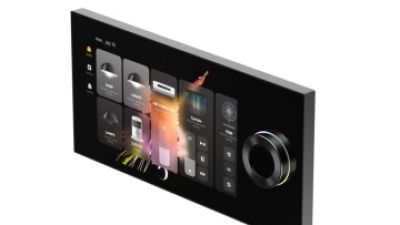
Smart Home trends are moving toward centralized, intuitive control, with homeowners seeking connected systems that simplify lighting, scenes, climate, music, and family media. Industry research reports indicate continued growth in Smart Home adoption, driven by reliable connectivity, personalized automation, and devices that combine multiple functions in a compact design. The M20 Smart Knob Center Control Screen responds to these needs with flexible binding, allowing users to assign one device or complete scene to a physical knob or button for immediate, comfortable operation.
Designed for stable performance, the system supports wireless 5G and 2.4G networks alongside 10/100M Ethernet. Its AIS Life album adds a personal touch by helping families preserve and enjoy meaningful moments. Different versions are available for central control, background music, KNX integration, and advanced ecosystem compatibility. The M20 and M20 Pro provide RS485, L1/L2 two-way relay, and L/N zero-firewire interfaces, while the M20-M includes RS485, AUX, SPK1, and SPK2 for flexible audio output. For professional installations, the M200-KNX combines KNX, AUX, relay, Type-C, SD card, and Ethernet interfaces, offering broad integration options. As an experienced manufacturer and dependable China-based supplier, we provide high-functionality solutions for evolving residential and commercial automation projects.
The usual MOQ ranges from 100 to 1,000 units.
It suits pilot launches, regional releases, or field validation.
Larger orders can reduce component costs.
Yes. Approve one functional sample before releasing production quantities.
A pilot batch of 20 to 50 units can expose repeated assembly issues.
Lead times commonly range from four to twelve weeks.
Share annual demand, forecast changes, packaging details, and acceptance criteria.
Provide a complete BOM, Gerber files, CAD drawings, and controlled firmware.
CAD drawings should show dimensions, mounting holes, labels, button travel, and critical interfaces.
Share the build version, programming method, bootloader behavior, test commands, and checksum.
Smart Control Panel OEM projects typically begin with an order quantity of around 100 to 1,000 units, while engineering teams may request 1–5 samples for design, interface, and functional validation. Moving from an approved prototype to volume production generally takes 4–12 weeks, depending on product complexity, component availability, testing requirements, and production capacity. Clear documentation is essential, including the bill of materials (BOM), Gerber files, CAD drawings, firmware, and detailed technical specifications.
A reliable manufacturing process should follow recognized quality and environmental requirements, such as ISO 9001, IPC-A-610, RoHS, and REACH. Before mass production, factories commonly conduct structured validation through Engineering Validation Testing (EVT), Design Validation Testing (DVT), and Production Validation Testing (PVT). First-article inspection further confirms that the initial units match approved drawings, performance criteria, and assembly standards, helping reduce quality risks and ensure a stable transition into regular production.