Leave Your Message
0%

Picking reliable Switch Panel manufacturers? That can really shape the whole electrical project. A well-built panel isn't just about distributing power, either. It protects circuits, makes maintenance less of a headache, and keeps operators in the loop when conditions shift.

Global buyers often end up comparing names like Schneider Electric, Siemens, ABB, Eaton, Legrand, Rockwell Automation, and Rittal. And sure, brand recognition helps. But it's not enough on its own. You still need to look closely at panel construction, enclosure quality, busbar design, thermal management, documentation, and regional service. Sometimes a quick walk through the factory floor tells you more: clean wiring channels, labeled terminals, sealed doors, cooling fans that aren't struggling under load.

Details matter. A lot.

Electrical educator Mike Holt put it simply: “Plan the work, then work the plan.” That advice fits just about any Switch Panel purchase. Buyers should check factory testing, component traceability, customization options, delivery records, and technical support. They should also make sure everything lines up with local voltage systems, installation practices, and recognized safety requirements.

Of course, some comparisons are never perfect. Published specs may not show how a panel holds up after years of dust, vibration, or repeated switching. A compact Double Switch Light Switch assembly might look efficient, but bad labeling can slow troubleshooting. And a cheaper enclosure can end up costing more in maintenance later.

This guide looks at leading manufacturers from an international buyer's point of view. It weighs engineering experience, production consistency, certifications, service coverage, and everyday usability. No single supplier is right for every application. The best choice depends on project scale, operating environment, budget, and how well communication goes before you buy.

Top Switch Panel Manufacturers for Global Buyers

Switch Panel Fundamentals: Types, Ratings, and IEC 60669-1 Requirements

A Switch Panel is more than a neat row of toggles. It combines control devices, terminals, enclosures, and identification labels. Common switch types include one-way, two-way, intermediate, push-button, pull-cord, and dimmer switches. Each type changes circuit control in a different way. A two-way switch, for example, uses two locations to operate one lighting load.

IEC 60669-1 covers switches for household and similar fixed electrical installations. It applies to alternating-current switches rated up to 440 V and 63 A. Switches with screwless terminals generally have a 16 A limit. Buyers should verify rated voltage, current, endurance, terminal temperature, and IP protection. The standard does not automatically certify the complete panel assembly. That distinction is easy to miss.

IEA’s Electricity 2024 report expects global electricity demand to grow by an average 3.4% annually from 2024 through 2026. More connected buildings will increase demand for dependable local controls. In practical inspections, installers should check conductor space, torque markings, heat discoloration, and clear circuit labels. A label alone is not proof. The enclosure must also suit dust, moisture, impact, and installation access. Product drawings often look convincing, but field wiring can expose weak terminal design. I would not select a panel by current rating alone. Misjudging switching frequency, ambient temperature, or load type remains a common purchasing mistake.

Technical Specifications: Voltage, Current, Poles, and IEC 60529 IP54–IP68

For global buyers, a Smart Panel Switch should be specified from installation conditions, not appearance. Voltage and current ratings must match the circuit, including start-up surges and continuous load. A 250 V rating does not automatically suit every 250 V application. AC and DC switching behave differently. Check the datasheet, terminal temperature, and electrical life. Small panels heat quickly.

Pole count also matters. Single-pole switching controls one circuit conductor, while double-pole designs can isolate two conductors together. Multi-pole versions suit linked circuits, but their current rating may change with simultaneous loading. Confirm the switching sequence, contact material, and wire size. Field checks often reveal mismatched terminals, even when the main rating looks correct.

IEC 60529 IP ratings describe enclosure protection, not complete product quality. IP54 limits dust entry and resists water splashes. IP65 adds dust-tight construction and water-jet protection. IP66 handles stronger jets. IP67 allows temporary immersion under defined conditions, while IP68 depends on the agreed depth and duration. These details matter near washdown areas, outdoor cabinets, and damp machinery. IP ratings do not confirm corrosion resistance, UV stability, or impact strength. I have seen buyers treat IP68 as universal protection. That assumption needs review. Ask for test conditions, gasket materials, cable-entry details, and samples tested in the intended installation position.

Top Switch Panel Manufacturers for Global Buyers - Technical Specifications: Voltage, Current, Poles, and IEC 60529 IP54–IP68

Panel Configuration Typical Application Rated Voltage Rated Current Range Available Poles Frequency Typical Short-Circuit Rating IEC 60529 Enclosure Rating Relevant IEC Standards Global Buyer Considerations
Single-phase distribution panel Lighting, socket circuits, small commercial and residential distribution 230 V AC nominal; equipment commonly rated up to 250 V AC 6–63 A per outgoing circuit; up to 125 A main incomer 1P, 1P+N, 2P 50/60 Hz Typically 6 kA or 10 kA at the final circuit protective device IP54–IP65 IEC 61439-3; IEC 60898-1; IEC 60529 Confirm phase-to-neutral voltage, neutral switching requirements, busbar layout, and local wiring rules.
Three-phase low-voltage distribution panel Commercial buildings, workshops, pumps, HVAC, and general industrial loads 400/415 V AC nominal; equipment commonly rated up to 690 V AC 63–630 A 3P, 3P+N, 4P 50/60 Hz 10–50 kA, depending on the protective device and installation design IP54–IP66 IEC 61439-1; IEC 61439-2; IEC 60947-2; IEC 60529 Verify prospective short-circuit current, neutral arrangement, earthing system, and temperature-rise limits.
Main switch and isolation panel Incoming isolation, maintenance shutdown, and equipment disconnecting 230/400 V AC; switchgear commonly rated 250, 415, or 690 V AC 16–630 A 2P, 3P, 4P 50/60 Hz Determined by the upstream protective device and switchgear assembly IP54–IP66 IEC 60947-3; IEC 61439-1; IEC 60529 Use a device with suitable utilization category, visible isolation where required, and lockable operating hardware.
Motor control panel Direct-on-line starters, motor protection, contactor control, and pump systems Up to 690 V AC power circuit; 24 V AC/DC or 110/230 V AC control circuit Motor feeder ratings from 6–400 A 3P or 3P+N power circuit; auxiliary contacts as required 50/60 Hz Typically 10–50 kA for the assembly, subject to coordination testing IP54–IP65 IEC 61439-1; IEC 61439-2; IEC 60947-4-1; IEC 60529 Check motor full-load current, starting method, overload class, control voltage, and coordination type.
Variable-speed drive panel Speed control for fans, pumps, conveyors, compressors, and process machinery 200–240 V AC single-phase or 380–480 V AC three-phase; drive ratings vary by model 2–400 A typical drive input current 2P or 3P input; output poles depend on the motor connection 50/60 Hz input; variable-frequency output Commonly 10–50 kA with specified input protection IP54–IP65 IEC 61439-1; IEC 61800-5-1; IEC 60529 Provide EMC measures, ventilation or thermal management, bypass requirements, and compatibility with the motor insulation system.
Outdoor weatherproof Switch Panel Outdoor lighting, irrigation, utilities, construction sites, and exposed service areas 230/400 V AC; commonly up to 690 V AC 16–250 A 1P, 2P, 3P, 4P 50/60 Hz Typically 6–25 kA, depending on the installed protective devices IP55–IP66 IEC 61439-3; IEC 60529; IEC 62262 where impact protection is specified Consider UV resistance, corrosion protection, cable glands, condensation control, drainage, and ambient temperature.
Washdown and hygienic Switch Panel Food processing, beverage production, pharmaceutical, and high-pressure cleaning areas 230/400 V AC; commonly up to 690 V AC 16–400 A 2P, 3P, 4P 50/60 Hz Typically 10–50 kA, subject to assembly and protective-device coordination IP65–IP66 IEC 61439-1; IEC 60947 series; IEC 60529 Specify smooth cleanable surfaces, corrosion-resistant materials, hygienic cable entries, and resistance to cleaning chemicals.
Temporary or portable site distribution panel Construction sites, events, temporary facilities, and mobile service applications 230/400 V AC nominal 16–125 A 1P, 2P, 3P, 4P 50/60 Hz 6–25 kA, according to the protective arrangement IP54–IP65 IEC 61439-4; IEC 60364-7-704; IEC 60529 Include residual-current protection where required, robust handles, mechanical protection, and suitable flexible cable connections.
Submersible or flood-exposed control panel Water-treatment equipment, pumping stations, marine service, and flood-prone installations 230/400 V AC; commonly up to 690 V AC 16–250 A 2P, 3P, 4P 50/60 Hz Typically 10–25 kA, subject to installation conditions IP67–IP68 IEC 61439-1; IEC 60947 series; IEC 60529 IP68 immersion conditions must be explicitly defined by the enclosure manufacturer; cable-entry performance must match the enclosure rating.
Stainless-steel industrial Switch Panel Corrosive, humid, coastal, chemical, and heavy-duty industrial environments 230/400 V AC; commonly up to 690 V AC 32–630 A 3P or 4P, with auxiliary circuits as required 50/60 Hz 10–50 kA, depending on the assembly design and protective devices IP65–IP68 IEC 61439-1; IEC 61439-2; IEC 60529 Specify stainless-steel grade, surface finish, gasket material, corrosion category, and enclosure impact resistance.
Low-voltage DC control panel Automation, instrumentation, telecommunications, access control, and battery-backed systems 12, 24, 48, or 110 V DC, depending on the system 1–125 A 1P, 2P, or multi-pole DC switching DC DC short-circuit rating must be separately specified; it is not interchangeable with an AC rating IP54–IP66 IEC 61439-1; IEC 60947-2; IEC 60947-3; IEC 60529 Confirm DC polarity, arc-extinction capability, battery fault current, voltage drop, and correct DC-rated protective devices.
High-current industrial switchboard Large manufacturing plants, data centers, utilities, and heavy industrial distribution 400/415 V AC or 480 V AC; equipment commonly rated up to 690 V AC 630–4000 A 3P or 4P 50/60 Hz 50–100 kA, subject to verified design and type-testing requirements IP54–IP66 IEC 61439-1; IEC 61439-2; IEC 60947-2; IEC 60529 Require verified temperature-rise, short-circuit withstand, clearances, creepage distances, busbar design, and service continuity details.

Global Compliance Benchmarks: UL 20, CE Marking, and RoHS 2011/65/EU

For global buyers, Switch Panel compliance starts with the enclosure, terminals, and switching mechanism. UL 20 covers general-use snap switches, including construction, ratings, and safety testing. A reliable manufacturer should provide current test evidence, not only a printed logo. Ask for rated voltage, current, temperature, and endurance details. ALight Switch On Wall may look simple, yet loose terminals can create heat under continuous load.

CE marking follows a different path. It is a manufacturer’s declaration that the product meets applicable European Union requirements. Buyers should request the EU Declaration of Conformity, technical documentation, and relevant test reports. RoHS Directive 2011/65/EU restricts hazardous substances in electrical and electronic equipment. The 2015/863 amendment added four phthalates. The 2023 Global E-waste Monitor reported 62 million tonnes of e-waste in 2022, while only 22.3% was formally collected and recycled. Material control matters. However, paperwork alone cannot prove every batch is identical.

Tips: Request a recent bill of materials and supplier declarations. Check restricted-substance results at homogeneous-material level. Confirm the test sample matches the production model. Keep photos of markings and packaging. Do not rely on one certificate forever; standards and components change. This is where many purchasing reviews remain incomplete. A small wiring revision may deserve a fresh assessment.

Leading Switch Panel Manufacturers by Region, Scale, and Product Segment

Top Switch Panel Manufacturers for Global Buyers

Leading manufacturers differ sharply by region, production scale, and product segment. East Asian suppliers often combine high-volume production with competitive pricing. European manufacturers usually emphasize modular designs, energy efficiency, and documented compliance with IEC 61439 and IEC 62271. North American producers commonly focus on utility, commercial, and industrial specifications. Regional workshops can offer faster customization, but their testing capacity may be narrower.

Scale changes the buying decision. Large factories typically provide automated assembly, routine testing, global logistics, and stronger spare-parts systems. Mid-sized manufacturers may respond faster to unusual enclosure dimensions or local wiring practices. Smaller specialists can handle retrofit panels and low-volume orders effectively. However, their quality records require closer review. MarketsandMarkets reported that the global switchgear market could grow from about USD 103.7 billion in 2023 to USD 145.1 billion by 2028. Growth does not guarantee equal supplier capability.

Product segment matters more than company size. Low-voltage panels suit buildings and light industry, while medium-voltage systems serve factories, infrastructure, and renewable-energy sites. High-voltage panels demand stricter insulation, protection, and site-testing evidence. The International Energy Agency estimates that annual grid investment must rise above USD 600 billion by 2030 to support secure electricity transitions. This supports demand for robust Switch Panels, especially outdoor and digitally monitored units. Yet digital features can add maintenance complexity. Buyers should verify short-circuit ratings, temperature-rise tests, IP protection, delivery history, and service coverage before comparing prices.

Factory Evaluation Metrics: ISO 9001, Test Reports, Capacity, and Lead Times

Choosing top Switch Panel manufacturers starts with evidence, not polished brochures. During factory evaluations, request current ISO 9001 certificates, audit dates, and certificate scope. The scope should cover design, assembly, testing, and relevant production sites. A certificate alone proves little. Check the issuing body and renewal status. Ask operators to explain recent corrective actions. Their answers reveal working discipline. Small details matter.

Test reports should identify the panel model, test date, instruments, and technician. Look for calibration numbers and traceable results. Request insulation resistance, dielectric strength, wiring continuity, and functional test records. For design tests, confirm the report matches the proposed configuration. A copied document is a warning. Auditors sometimes find impressive reports without enclosure-change records. That gap needs clarification before approval.

Capacity also needs measurable proof. Review monthly output, active orders, shifts, critical equipment, and outsourced processes. Ask how the factory handles material shortages or engineering changes. Lead times should separate drawing approval, purchasing, assembly, testing, and shipping preparation. Request a schedule with realistic buffer days. Short promises can hide overloaded production. Compare planned output with recent dispatch records. No evaluation method is perfect. I may still overvalue neat paperwork. Actual production evidence deserves more weight. A perfect delivery record is unlikely, but unexplained delays require answers.

Global Buyer Scorecard: MOQ, Warranty, Incoterms, and Total Landed Cost

Top Switch Panel Manufacturers for Global Buyers

A useful scorecard starts with MOQ, not catalog appearance. For a Home Kit Light Switch, compare the minimum order against your forecast, storage space, and testing budget. A low MOQ may hide a higher unit price. Request production samples before placing volume orders. Check switch material, terminal quality, labeling, and packaging strength. Small details often create expensive returns.

Warranty terms need practical wording. Confirm coverage length, replacement procedures, evidence requirements, and shipping responsibility. Ask how defects are recorded after installation. Incoterms also change the real purchase price. Under FOB, the buyer manages main freight and import handling. Under DDP, more costs are included, but the seller’s scope must be verified. Calculate total landed cost using product price, tooling, freight, insurance, duties, inspection, and local delivery. A spreadsheet is better than a sales promise.

Tips: Score each supplier from one to five, then attach evidence. Keep quotations, test reports, warranty clauses, and shipping assumptions together. Recheck freight before ordering. Rates move. No scorecard is perfect. I still leave a risk allowance because forecasts can be wrong, packaging can fail, and a cheap order can become costly after arrival.

S10 Smart Home Central Control Panel: Triple-Mode Interaction, HD Display, and Wide Compatibility

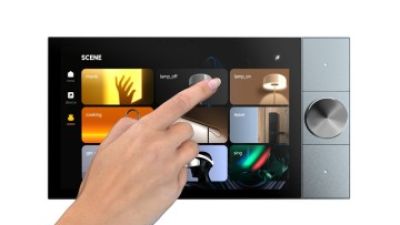
Smart Home control is moving toward more natural, centralized interaction. A recent MarketsandMarkets report projects the global Smart Home market will continue expanding strongly through the decade, driven by connected lighting, climate control, entertainment, and security applications. The S10 Smart Home Central Control Panel responds to this trend with triple-mode interaction: a knob, physical buttons, and a touch interface. Users can customize functions and manage lighting, temperature, and music with a single key, reducing the need to operate multiple devices separately.

Its 10-inch IPS display delivers 1280 × 800 resolution, presenting devices, scenes, and applications from one centralized home screen. An ambient light sensor automatically adjusts brightness for more comfortable viewing, while the AIS Life album adds a dynamic visual element to the living environment. According to the International Energy Agency, buildings account for around 30% of global energy demand, making practical centralized control increasingly valuable for managing connected home systems more efficiently.

Designed for varied installation needs, the panel is available in smart central control, background music, and KNX versions, with wireless and LAN support for building intercom control. The S10 includes RS485, L1/L2 two-way relay, and L/N zero-firewire interfaces; the S10-M adds AUX, SPK1, and SPK2; while the S10-KNX provides KNX, AUX, relay, Type-C, SD card, and Ethernet connectivity for broader building automation integration.

FAQS

What does a switch panel usually include?

It combines switches, terminals, an enclosure, and circuit labels. Each part supports safe control and inspection. Labels matter.

Which switch types are commonly used?

Common types include one-way, two-way, intermediate, push-button, pull-cord, and dimmer switches. A two-way switch controls one light from two locations.

What does IEC 60669-1 cover?

It covers household and similar fixed-installation switches. It applies to alternating-current switches up to 440 volts and 63 amps.

What ratings should buyers verify?

Check voltage, current, switching endurance, terminal temperature, and IP protection. Screwless terminals generally have a 16-amp limit.

Does switch compliance certify the complete panel?

Not automatically. The switch standard may not cover the complete assembled panel. This distinction is easy to miss.

How can a factory’s quality system be evaluated?

Request current certificates, audit dates, and coverage details. Confirm design, assembly, testing, and production sites are included. Paperwork alone proves little.

What should test reports contain?

Reports should identify the model, test date, instruments, technician, and calibration references. Check insulation resistance, dielectric strength, continuity, and functional results.

How should global buyers compare supplier costs?

Calculate total landed cost, including tooling, freight, insurance, duties, inspection, and local delivery. A spreadsheet helps expose hidden expenses.

What should buyers check before placing a volume order?

Compare minimum order quantity with forecasts and storage space. Request samples and inspect terminals, labels, materials, and packaging. I may still underestimate delivery risks.

Conclusion

Choosing the right Switch Panel manufacturer requires more than comparing prices. Buyers should first understand panel types, electrical ratings, pole configurations, voltage and current limits, and protection levels from IP54 to IP68. Product selection should also consider relevant requirements such as IEC 60669-1 for switches, UL 20, CE marking, RoHS 2011/65/EU, and other applicable market regulations. These benchmarks help confirm that products are safe, reliable, and suitable for their intended environments.

A thorough factory evaluation should review ISO 9001 systems, independent test reports, production capacity, quality-control procedures, customization capabilities, and realistic lead times. Regional sourcing decisions can then be compared by product segment, manufacturing scale, and export experience. Finally, a buyer scorecard should assess MOQ, warranty coverage, Incoterms, packaging, logistics, after-sales support, and total landed cost. This structured approach enables global buyers to identify dependable suppliers and balance compliance, performance, delivery reliability, and long-term value.

Jackson

Jackson

Jackson is a seasoned marketing professional at Shenzhen X-focus Co., Ltd. (AISpeaker), where he brings a wealth of expertise in smart home technologies. With a profound understanding of the company’s core offerings—which include advanced smart central control panels, background music systems, and......
Previous European Back Box for Smart Control Panels: Installation and Compatibility Guide