Leave Your Message
0%

An EU Smart Home Control Panel can't just be about flipping lights on or off, or nudging the thermostat up and down. It really needs to make connected living feel clear, safe, and genuinely useful in all sorts of European homes. Someone in Helsinki might be relying on a heat pump, while someone in Madrid is juggling shutters, and someone in Berlin is dealing with radiator valves. Every setup comes with its own expectations for how control should work.

Honestly, the best designs start with real-world experience. Installers want straightforward commissioning steps. Residents want icons they can read, menus in their own language, and offline functions they can trust. A responsive touchscreen should put room temperature, energy use, and device status right there, at a glance. Voice control? Great for accessibility—but it shouldn't push physical buttons or visual feedback out of the picture. An Android Smart Home Control Panel can offer flexible integration, sure, but manufacturers still have to stay on top of updates, permissions, and long-term compatibility. That stuff gets messy if you ignore it.

Privacy should be built into every screen, not tacked on later. Data collection needs a clear reason, honest consent, and retention controls that actually make sense. On security, you want encrypted communication, strong authentication, secure boot, and a documented way to handle vulnerabilities. Compatibility with Matter, KNX, and selected building-management systems can cut down installation friction—though let's be real, integration is rarely effortless. And European rules around cybersecurity, accessibility, electromagnetic compatibility, and data protection mean plenty of careful technical review.

Small details matter.

A hallway panel should still be readable at night. A kitchen interface should work when your hands are wet. An installer should be able to recover from a failed pairing attempt without guessing what went wrong. These sound like simple asks, but real projects often expose the gap between specs and daily use. No platform is perfect. Manufacturers should test with older users, renters, installers, and people with disabilities. That kind of practical feedback is what turns an EU Smart Home Control Panel from just an attractive display into something European homes can actually depend on.
EU Smart Home Control Panel: Key Features and Requirements for European Markets

European Smart Home Control Panels: Definition and Market Context

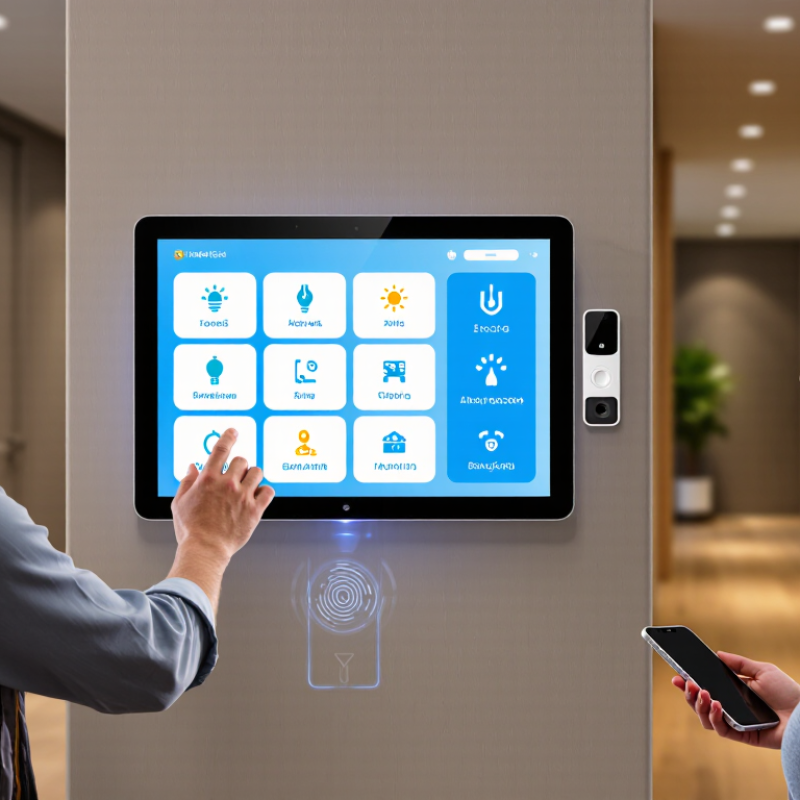
A European Smart Home Control Panel is a central interface for managing lighting, heating, security, blinds, and energy devices. It may use a wall-mounted touchscreen, mobile application, voice input, or several together. The important point isinteroperability. A panel should connect devices across common networks and protocols, rather than locking residents into one ecosystem.

Market demand is growing with connected-device adoption. Statista Market Insights forecasts Europe’s Smart Home market to generate more thanUS$40 billion in revenue during 2025. The International Energy Agency reports that buildings consume about 30% of global final energy.

This gives control panels a practical role: displaying room temperature, detecting unusual consumption, and adjusting heating when occupants leave. A small screen can influence a large monthly bill.

European requirements are more demanding than attractive interfaces. Users expect clear consent, local language support, secure updates, and dependable operation during weak internet connections. The European Union Agency for Cybersecurity repeatedly identifies default passwords, insecure updates, and poor device maintenance as major IoT risks. Panels should therefore support strong authentication, encrypted communication, and transparent data settings.

Real households remain messy. Older heating systems, thick walls, and mixed wireless standards can reduce performance. Market forecasts also simplify reality, because adoption differs sharply between countries, housing types, and income groups.

Core Functions of a Smart Home Control Panel

A Smart Home Control Panel should make daily routines clear, quick, and dependable. Its main function is central control for lighting, heating, ventilation, blinds, and selected security devices. Users should adjust room temperature with a simple slider, not search through complex menus. Physical buttons can help when hands are wet or the internet fails. Small details matter.

Reliable panels should support scenes, schedules, and room-based controls. A “night” scene might lower blinds, reduce heating, and switch off selected lights. Energy monitoring can show hourly consumption through readable charts. This helps households notice an open window or unnecessary heating. The system should also provide clear alerts for unusual activity, smoke signals, water leaks, or device failure. Alerts must be noticeable, but not frightening.

European homes need privacy-aware design and dependable security updates. Local processing can reduce unnecessary data transfers, while encrypted communication protects household information. Access permissions should separate residents, guests, and installers. The panel should work with different devices and common communication standards, because homeowners may change equipment later. Accessibility is essential, including readable text, strong contrast, and multilingual options. A weak point remains: too many connected functions can confuse users. Testing with older adults and people with limited technical experience can expose problems that laboratory checks miss.

Connectivity Standards and Device Compatibility

A Smart Control Panel for European homes must connect across varied networks and building types. Wi-Fi suits cameras and high-bandwidth devices, while Thread supports low-power sensors through a mesh network. Bluetooth Low Energy remains useful for nearby setup and temporary access. Ethernet can provide stable communication when wireless signals weaken behind thick walls.

Interoperability depends on more than listing supported protocols. The panel should understand Matter over Wi-Fi or Thread, communicate with established low-power systems, and support IPv6-based networking. Device discovery should be simple, with clear pairing instructions and visible connection status. In a renovated apartment, a temperature sensor may sit behind concrete, while a smart meter uses a separate local interface. The controller must handle these differences without forcing residents to replace working equipment.

Security and local reliability also matter. Secure onboarding, encrypted communication, individual credentials, and automatic security updates should be built into the design. Local control can keep lights and heating responsive during an internet outage. Latency matters. I have seen installations fail because one device required a cloud connection for a basic command. Compatibility claims also need testing with real devices, not only laboratory specifications. No panel handles everything perfectly, so installers should document unsupported features and possible workarounds before deployment.

EU Smart Home Control Panel: Key Features and Requirements for European Markets - Connectivity Standards and Device Compatibility

Connectivity Standard Primary Radio or Transport Network Characteristics Typical Compatible Devices Control Panel Requirements European Market Considerations Compatibility and Design Notes
Matter Application layer over Ethernet, Wi-Fi or Thread; Bluetooth Low Energy is commonly used for commissioning. IP-based interoperability standard designed to provide a common command and data model across supported ecosystems. Lighting, plugs, thermostats, door locks, blinds, sensors, media devices and energy-management devices, subject to device-type support. Support secure commissioning, QR or numeric setup codes, IPv6 networking, firmware updates and multi-admin operation. Must operate on radio technologies that comply with applicable European radio requirements. Data processing should follow the GDPR where personal data is involved. Matter compatibility does not automatically guarantee support for every device feature. Check the supported device type, command clusters and software version.
Thread IEEE 802.15.4 at 2.4 GHz. Low-power IPv6 mesh network. Battery-powered devices can use end devices, while powered devices can extend the mesh as routers. Door and window sensors, motion sensors, temperature sensors, locks, lighting products and other low-power devices. Provide a Thread border-router function or communicate with a compatible border router. Support IPv6, mesh diagnostics and secure commissioning. Uses the 2.4 GHz band, which is available throughout Europe but can experience interference from Wi-Fi and other 2.4 GHz equipment. Thread and Matter are different layers: Thread provides network connectivity, while Matter provides application-level interoperability.
Wi-Fi IEEE 802.11, commonly using 2.4 GHz and 5 GHz bands. High bandwidth and direct IP connectivity. Usually relies on an existing wireless access point and local network infrastructure. Cameras, displays, appliances, speakers, lighting controllers, thermostats and high-data-rate gateways. Support secure onboarding, WPA2 or WPA3 where appropriate, IPv4 and IPv6 considerations, local discovery, network segmentation and offline operation. Radio equipment placed on the European market must meet applicable requirements under the Radio Equipment Directive and carry the appropriate conformity marking. 2.4 GHz generally provides greater range, while 5 GHz can provide more capacity but usually has shorter indoor coverage. Enterprise networks may restrict multicast discovery.
Zigbee IEEE 802.15.4, normally at 2.4 GHz in Europe. Low-power mesh networking with a coordinator, routers and end devices. Commonly uses a dedicated application profile or gateway. Bulbs, switches, plugs, sensors, thermostats, blinds and energy-monitoring accessories. Include a compatible coordinator or gateway, channel-selection controls, device pairing, binding support and network backup or restoration. European deployments should use compliant 2.4 GHz radio configurations and appropriate electromagnetic compatibility testing. Device interoperability can vary by profile, manufacturer-specific extensions and gateway implementation. A generic Zigbee label alone is not sufficient to confirm complete feature compatibility.
Bluetooth Low Energy 2.4 GHz Bluetooth Low Energy radio. Short-range, low-power communication. Supports direct device control, commissioning and, in some configurations, managed mesh networking. Locks, proximity devices, health-related sensors, commissioning accessories, room sensors and portable control devices. Provide secure pairing, key management, privacy features, firmware-update support and a fallback method for remote access when required. 2.4 GHz operation is generally suitable for the European market, but the final product still requires applicable radio and EMC conformity assessment. Bluetooth Low Energy is often used for setup rather than continuous whole-home control. Range depends strongly on walls, antenna placement and transmit power.
Z-Wave Sub-GHz radio; European products commonly use the 868 MHz regional band plan. Low-power mesh network designed for home automation, with regional frequency variants and a dedicated controller or gateway. Locks, sensors, switches, thermostats, blinds, alarms and energy-control devices. Use the correct European radio region, support secure inclusion, device classes, network healing and certified command handling. Frequency and transmit-power rules differ by region. A controller intended for Europe must not be configured with a non-European radio variant. Sub-GHz operation can provide useful indoor penetration and reduced 2.4 GHz congestion. Compatibility depends on security level, command class and controller software support.
KNX Twisted-pair bus, radio, power-line or IP-based transport options. Building-automation system with distributed control, standardized datapoint types and strong suitability for wired installations. Lighting, shutters, HVAC, occupancy sensors, access control, energy management and building-wide automation equipment. Support KNX/IP communication, group addresses, secure communication where applicable, commissioning workflows and integration with IP networks. Widely used in European building automation. Installation must comply with applicable electrical, construction and low-voltage safety rules. Particularly suitable for new construction and professional retrofits. Wired bus systems can improve reliability but require structured cabling and qualified installation.
DALI-2 Dedicated two-wire digital lighting bus; commonly integrated with IP gateways. Lighting-control protocol supporting individual and grouped luminaire addressing, scenes, status feedback and diagnostic information. LED drivers, luminaires, occupancy sensors, daylight sensors, switches and lighting-control modules. Provide a DALI gateway or interface, device discovery, group and scene management, fault reporting and integration with the main automation network. Useful for commercial, residential and multi-dwelling lighting projects where European electrical installation practices are followed. DALI-2 is primarily a lighting-control protocol, not a complete whole-home networking standard. Interoperability depends on supported control gear and application commands.
Ethernet IEEE 802.3 wired network, commonly using copper cabling or fiber in larger installations. Stable, low-latency IP connectivity with predictable performance and support for network segmentation and power delivery in suitable installations. Control panels, gateways, cameras, access systems, networked HVAC equipment, servers and professional building controllers. Support IPv4 and IPv6 planning, secure administration, VLAN awareness, TLS-protected services, time synchronization and controlled remote access. Wired infrastructure can simplify reliability and electromagnetic planning, but installation must follow applicable electrical and building requirements. Recommended for fixed control panels, gateways and high-bandwidth equipment. It does not replace the device-level protocol required by sensors or actuators.
IP and IPv6 Support Network-layer capability used over Ethernet, Wi-Fi and Thread. Enables routing, discovery, secure transport and integration with local or cloud services without protocol-specific physical wiring. Control panels, gateways, border routers, networked appliances and multi-protocol bridges. Support secure DNS, service discovery, firewall rules, certificate validation, IPv6 readiness and clear local-versus-cloud control policies. European deployments should minimize unnecessary personal-data transfers and provide transparent information about processing, storage and remote access. IP connectivity improves integration but does not by itself provide device interoperability. The application model and security implementation remain essential.
Secure Commissioning Cryptographic onboarding over the selected local connectivity method. Establishes device identity, authenticates the user or installer and creates encrypted operational communication. All connected devices, especially locks, alarms, cameras, access controls and energy-management equipment. Use unique setup credentials, protected QR or numeric codes, role-based access, revocation, audit logs and recovery procedures. Security and privacy controls should support European data-protection expectations and applicable product-cybersecurity obligations. Do not rely on a shared default password. The interface should clearly distinguish administrator, installer, household member and guest permissions.
Firmware and Software Updates Local network, encrypted internet connection or controlled installer workflow. Maintains security, protocol compatibility, stability and regulatory compliance throughout the product lifecycle. Control panels, gateways, routers, sensors, actuators and connected appliances. Provide signed updates, rollback protection, version visibility, update scheduling, failure recovery and a documented support period. Connected products may be subject to evolving European cybersecurity and product-safety requirements. Update policies should be documented before market launch. Updates should preserve automation scenes and user permissions where possible. Critical security updates should not depend exclusively on a paid subscription.
Privacy and Data Governance Applies to local, remote and cloud-connected communication. Controls collection, storage, sharing and deletion of personal, behavioral and household data. Cameras, occupancy sensors, voice interfaces, access systems, energy meters and location-aware devices. Provide consent controls where required, data minimization, retention settings, export and deletion functions, encryption and privacy notices. The GDPR can apply when personal data is processed, including identifiable occupancy patterns, access logs and video or audio data. Prefer local processing for sensitive automations when practical. Make cloud dependence, remote diagnostics and third-party data sharing visible to users.
Radio and EMC Compliance Applies to wireless transmitters, receivers and products containing radio modules. Ensures radio equipment uses spectrum responsibly and does not create unacceptable electromagnetic interference. Wi-Fi, Thread, Zigbee, Bluetooth Low Energy, sub-GHz devices and wireless control panels. Maintain technical documentation, test the final enclosure and antenna configuration, manage radio-region settings and provide conformity information. European radio products generally fall under the Radio Equipment Directive, together with applicable EMC, safety and spectrum requirements. Using a pre-tested radio module does not automatically make the complete finished product compliant. The final assembly and intended use must be assessed.
RoHS and Product Materials Non-connectivity requirement affecting electrical and electronic equipment. Restricts specified hazardous substances in electrical and electronic products and components. Control panels, gateways, sensors, power supplies and connected household devices. Maintain supplier declarations, component records and technical files covering materials and applicable exemptions. Products placed on the European market may need to comply with the Restriction of Hazardous Substances framework and related marking obligations. Material compliance should be managed across the complete bill of materials, including cables, batteries, displays, connectors and replacement parts.
Accessibility and User Interface Applies to display, physical controls, mobile interfaces and voice or remote operation. Supports operation by users with different visual, auditory, motor and cognitive abilities. Wall-mounted panels, handheld controllers, mobile applications and web dashboards. Use readable contrast, scalable text, clear focus order, tactile or physical alternatives, understandable alerts and accessible authentication. Accessibility obligations depend on the product, service, deployment context and applicable national implementation. Public-sector projects may have additional requirements. Keep essential functions available without a cloud account where feasible, and provide clear status feedback for security-critical actions.

Privacy, Cybersecurity, and Data Protection Requirements

An EU smart home control panel should treat privacy as a design requirement, not a settings page added later. It may process voice commands, occupancy patterns, camera events, and energy data. These details can reveal daily routines. Data minimization matters. The panel should collect only what each function needs, explain the purpose clearly, and request valid consent when required. Users also need practical controls for access, correction, deletion, and export.

Security must protect the device throughout its service life. Secure boot, encrypted storage, encrypted communications, strong authentication, and role-based access reduce common risks. Automatic security updates should be signed, verified, and delivered through a controlled process. Manufacturers should maintain vulnerability reporting, response procedures, and clear support periods. A software component inventory can help teams track exposed libraries. Physical access matters too. A reset button should not erase evidence or bypass authorization without safeguards.

European deployments also require disciplined data governance. Logs should have retention limits, and remote access should be disabled by default. Processing outside the European Economic Area needs a lawful transfer mechanism and careful vendor assessment. A documented privacy impact assessment can expose weak assumptions before installation. Yet perfect protection is unrealistic. Overly complex consent screens may confuse residents, while excessive security prompts encourage unsafe workarounds. Testing with older users, children’s environments, and limited-connectivity homes can reveal these gaps. A reliable panel is not merely compliant; it remains understandable when something goes wrong.

Accessibility, Localization, and User Experience Design

A Smart House Control Panel for European homes must serve varied abilities, languages, and living habits. Clear contrast, large touch targets, and tactile controls support users with low vision or limited dexterity. Every essential action should work without precise gestures. Voice control can help, but it should never be the only option.

Accessibility testing should follow WCAG principles and relevant European accessibility requirements. In practice, field tests reveal problems that checklists miss. A button may look obvious to a designer but confuse an older resident. A short confirmation sound can reassure one user and disturb another. Adjustable volume and visual feedback create a safer experience.

Localization involves more than translating labels. Dates, temperatures, decimal formats, room names, and privacy messages must match local expectations. The interface should support long German words, accented characters, and right-to-left languages where needed. Use familiar terms, not technical jargon. Keep navigation consistent across heating, lighting, and security controls.

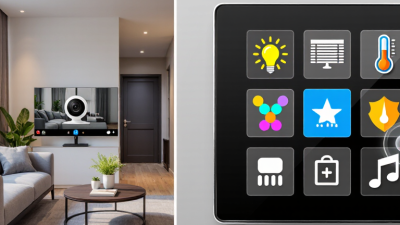
The best layouts show room status at a glance. A hallway screen might display a warm amber light icon, a 20°C setting, and one large control. Too many options create hesitation. Fewer choices help.

Designers should also explain data permissions in plain language. Residents deserve to know what the panel records and why. No interface is perfect. Continuous feedback, accessibility audits, and careful updates remain necessary, especially when household needs change.

Installation, Compliance, and Market Readiness in Europe

A Home Automation Control Panel for Europe must be simple to install and difficult to misuse. Installers should confirm circuit isolation, wireless coverage, and local electrical requirements before mounting the unit. A wall panel should remain usable near a doorway, even with wet hands or limited mobility. Small details matter.

Compliance begins with the correct conformity assessment. The panel may need to address the Radio Equipment Directive, electromagnetic compatibility, RoHS, and national installation rules. If it stores occupancy data, access records, or voice commands, GDPR principles also matter. Data minimisation and short retention periods reduce exposure. The European Commission’s cybersecurity requirements for radio equipment began applying in August 2025. The Cyber Resilience Act entered into force in December 2024, with major obligations scheduled for December 2027. That assumption is risky.

Market readiness requires more than CE marking. The IEA reports that buildings consume about 30% of global final energy, making reliable energy controls commercially meaningful. Eurostat reported that 93% of EU residents aged 16–74 used the internet in 2023, yet digital confidence is not universal. Interfaces should support clear language, physical controls, and offline operation. ETSI EN 303 645 offers useful baseline guidance for consumer IoT security. Secure updates, unique credentials, and vulnerability reporting should be planned before launch. We still underestimate installer training. A technically compliant panel can fail when its instructions are vague, translated poorly, or impossible to follow on a cold construction site.

M10 All-in-one Wall Switch Panel: Features, Benefits, Compatibility, and Buying Guide

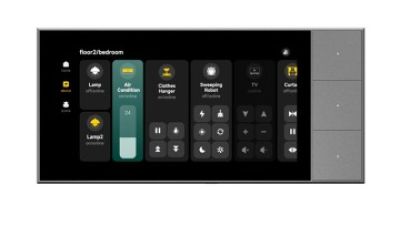
The M10 All-in-one Wall Switch Panel combines smart device control, scene management, and modern display technology in one convenient unit. Its 6-inch IPS HD screen delivers a sharp 1440 × 720 resolution, making menus, device status, and automation scenes easy to view. Three customizable physical buttons provide quick access to frequently used functions, while users can switch between device mode and scene mode according to their daily needs. A one-key import feature simplifies setup and supports an unlimited number of devices for centralized management.

Designed as a practical replacement for outdated light controls, the M10 supports multiple communication protocols and includes two-channel relays for flexible control of compatible lighting or electrical equipment. Its all-in-one design can help reduce wall clutter while providing a more organized smart home experience. The panel is suitable for homes, apartments, offices, and other spaces that require convenient control from a single location.

Before buying, check the available wall box, wiring configuration, power requirements, and the protocol compatibility of your existing devices. It is also important to confirm whether the relay specifications match the intended electrical load and whether the panel’s dimensions fit the installation area. Manufactured in China with an emphasis on reliable construction and practical design, this wall switch panel offers a flexible solution for upgrading everyday device management.

FAQS

What is a European smart home control panel?

It is a central interface for lighting, heating, security, blinds, and energy devices. It may use a wall touchscreen, mobile app, voice input, or several together. Interoperability matters most. Devices should communicate across common networks and protocols.

How can a control panel reduce household energy use?

It can show room temperatures, detect unusual consumption, and adjust heating after residents leave. For example, a hallway screen might show 20°C and a simple heating control. Small changes can affect a monthly bill. Results vary between homes.

What accessibility features should the panel include?

Use strong contrast, large touch targets, tactile controls, and clear visual feedback. Essential actions should work without precise finger movements. Voice control can help, but it should not be the only option. Older residents may need more testing.

Why is localization more than translation?

Interfaces should match local languages, dates, temperatures, decimal formats, and room names. They should handle accented characters and long words. Simple terms work better than technical jargon. Keep navigation consistent.

Can the panel operate when the internet connection is weak?

Important local functions should continue during outages or weak connections. Heating and lighting controls should not depend entirely on cloud access. A temporary offline mode can prevent unnecessary frustration. This detail is often underestimated.

How should the panel protect household data?

It should explain what it records and why, using plain language. Use strong authentication, encrypted communication, secure updates, and limited data retention. Occupancy records and voice commands require careful handling. Privacy settings should be easy to find.

What should installers check before mounting the panel?

Installers should confirm circuit isolation, wireless coverage, wall conditions, and local electrical requirements. The panel should remain usable near a doorway. Wet hands and limited mobility must be considered. Installation instructions need practical detail.

What can make a technically compliant panel fail in real homes?

Thick walls, older heating systems, mixed wireless standards, and unclear instructions can reduce performance. Poor translations may confuse installers on a cold construction site. A conformity mark alone proves little about daily usability. Field feedback remains necessary.

Conclusion

An EU Smart Home Control Panel is a central interface that helps European households monitor, automate, and manage connected devices such as lighting, heating, security systems, and energy equipment. Its key functions include real-time status updates, scheduling, automation routines, remote access, energy monitoring, and clear alerts. To provide reliable performance, the panel should support widely adopted connectivity standards and offer compatibility across devices from different manufacturers, reducing dependence on a single ecosystem.

For European markets, privacy, cybersecurity, and responsible data management are essential. Systems should use secure authentication, encrypted communication, regular software updates, and transparent data controls that align with European protection requirements. A successful design should also support multiple languages, intuitive navigation, accessibility features, and adaptable interfaces for different user needs. Finally, installation procedures, electrical safety, documentation, technical support, and market-specific compliance should be addressed to ensure the product is safe, trustworthy, easy to use, and ready for deployment across diverse European homes.
Blog Tags:

    Emily

    Emily

    Emily is a dedicated marketing professional at Shenzhen X-focus Co., Ltd. (AISpeaker), a leading manufacturer of smart home panels in China. With her extensive knowledge of the company's product offerings, including smart central control panels, background music panels, and intercom systems, she......
    Previous China Top WiFi Smart Home Manufacturers for Global Buyers