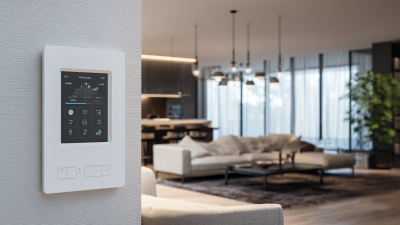
In today’s world, where smooth and hassle-free communicationis more important than ever, the development of Building Intercom Systems really highlights just how much we need better connectivity in our daily spaces. I read a recent industry report that predicts the global market for intercoms will hit aroundUSD 3.5 billion by 2026. That’s mainly because cities are growing faster, and there's a rising craving for Integrated Smart Home tech.
Take Shenzhen X-focus Co., Ltd., for example— they’re a pretty big name in China when it comes to making Smart Home Panels. They focus oncutting-edge tech that blends old-school intercoms with the newest smart central control systems. As urban areas get more complex, organizations are looking for smarter intercom solutions—not just for security, but also to make communication smoother and manage access more easily.
Thanks to their heavy investment in research and development, Shenzhen X-focus is really leading the charge in transforming Building Intercoms. The goal? Making communication more natural, intuitive, and effective than ever before.
Current Trends in Building Intercom Technology
These days, you can really see how Building Intercom tech is shifting towardswireless solutions. Thanks to new communication tech and folks wanting more flexibility in their spaces, wireless intercomsare everywhere now. They blend easily with Smart Home Systems and other building tech, making life so much simpler. There's a pretty wide variety out there too — from outdoor to indoor models — to suit all kinds of needs. With everyone jumping on the smart tech train, features likevideo chat, user-friendliness, and mobile compatibility are becoming must-haves.

And honestly, the COVID-19 pandemic sped things up even more. People started craving safer, contactless ways to communicate, so the demand for touchless and hands-free options shot up. Manufacturers had to innovate fast to keep up. Technologies like Wi-Fi and RF are leading the charge, providing reliable links in apartments, office buildings, and other modern spaces. Looking ahead, it’s pretty exciting — these trends are sure to bring some cool new features focused on making life easier and improving how buildings operate overall.
Integration of Smart Devices in Communication Systems
These days, smart devices are really changing the game when it comes to how we communicate in modern buildings. You know, as buildings get more and more automated, those old-school intercoms are basically making way for fancy new systems that connect us to the space around us more smoothly. Things like smartphones, tablets, and voice assistants now act as the go-to hubs for chatting, controlling lights, security, you name it. It’s pretty cool because it’s not just about voice calls anymore — you can also do video chats and get alerts in real-time, making everything feel so much more interactive and safe.
And honestly, what’s even more exciting is how artificial intelligence and machine learning are stepping into the picture. These smart systems can learn from how you use them, predict what you might need, and even give personalized responses. It’s like your building gets smarter alongside you. Plus, it makes life easier by helping with remote security checks and management. All in all, combining these smart gadgets with communication tech is paving the way for a future where everything’s connected and super easy to use. Spaces will be not only smarter but also way more intuitive and responsive to what we want and need.
User-Centric Features Enhancing Intercom Usability
Hey, if you’ve been paying attention to how building intercom tech is changing, you’ll notice that features centered around users are taking center stage. I came across a report from MarketsandMarkets that says the intercom market is expected to hit a whopping $22.8 billion by 2025 – and honestly, it’s mostly because these systems are getting smarter about how they serve us. Nowadays, modern intercoms come packed with cool integrations, letting folks communicate through mobile apps. So, you can basically talk to your intercom from anywhere, which is a huge leap from the old-school setups we used to have.
And here’s another thing—accessibility is really shaping where this tech is headed. A study by the Global Accessibility Reporting Initiative pointed out that around 15% of people worldwide deal with some kind of disability. That’s a big chunk! Because of that, designers are now adding features like voice control, visual alerts, and customizable interfaces to make these systems usable for everyone, no matter their physical abilities. As building managers and developers keep pushing these user-friendly improvements, intercoms aren’t just about talking anymore—they’re becoming super important parts of modern, inclusive buildings that work for everyone.
Security Enhancements in Modern Intercom Solutions
You know, as building intercom technology keeps evolving, security upgrades are becoming more and more crucial – not just for keeping residents safe, but also to add a bit of convenience for everyone. These days, new intercom systems come packed with cool features like video screens, encrypted chats, and two-way audio, so it’s way easier to see who’s at the door before you decide to open up. It’s a total game-changer—deterring unauthorized visitors while giving folks peace of mind, especially in shared living spaces.
If you're thinking about picking one, I’d suggest going for models with high-def video and instant alerts. Pairing your intercom with smart access controls is also a smart move—imagine locking and unlocking your door from your phone, even if you're not home. Pretty handy, right?
And here's the really interesting part—some of these systems now use artificial intelligence. They can recognize faces or spot unusual activity, which helps building managers react more quickly if something suspicious pops up. With all these tech advancements, intercoms aren’t just about chatting anymore—they’re about making your entire living space safer and smarter, adapting to what users really need.
Oh, and just a quick tip—keep your software up to date. It’s the best way to avoid security issues. Also, look for systems that let you set customizable access permissions for different folks, like residents versus staff. That way, you get better security without making things complicated or inconvenient.
Future Innovations: AI and IoT in Intercom Technology
You know, combining Artificial Intelligence (AI) and the Internet of Things (IoT) with building intercoms is really changing how we communicate in modern spaces. AI is making these systems smarter—think voice recognition and natural language processing—so people can just speak naturally and interact with their environment without fuss. It’s pretty cool because residents and employees can give simple voice commands, making everything flow more smoothly and making the system accessible to basically everyone.
And then there’s IoT, which allows these intercoms to connect with other smart devices around the building. This means everything works together—security cameras, alarms, access controls—all in real-time. For instance, if someone rings the doorbell, the intercom can even communicate with the security camera to give you a quick visual confirmation. That’s a huge boost for safety and convenience. As these tech things keep improving, I think future intercom systems won’t just be about making life easier—they’ll also make buildings safer and more efficient for everyone living or working there.
Enhancing Communication in Modern Spaces: The Future of Building Intercom Technology
| Feature | Current Technology | Future Innovations | Potential Benefits |
| Voice Recognition | Basic voice commands | Advanced AI voice assistants | Improved accessibility and user experience |
| Video Communication | Standard video intercoms | HD video with AR capabilities | Enhanced interaction and integration with security systems |
| Integration with Smart Home | Basic home automation | Fully integrated IoT ecosystem | Streamlined control and monitoring |
| Data Security | Basic encryption | End-to-end encryption with AI monitoring | Increased safety and privacy |
| User Interface | Basic touchscreen | Intuitive AI-driven interfaces | Simplified use for all ages |
The Role of Mobile Applications in Intercom Systems
You know, the way communication tech is evolving so rapidly is truly changing how our modern intercom systems work — and mobile apps are really at the heart of this shift. It’s pretty exciting because, according to some projections, the global wireless intercom market is expected to jump from about $6.95 billion in 2024 to over $12.58 billion by 2032. That’s a compound annual growth rate of roughly 7.8%, which sounds pretty promising. People and businesses alike are increasingly looking for more flexible, scalable, and secure ways to communicate — and mobile apps totally fit the bill.
Right now, cloud-based intercom solutions are leading the charge. They let users connect instantly from virtually anywhere, which is such a game-changer. The newest systems are super smooth in seamlessly working with existing setups, so managing communication via smartphones or tablets has never been easier. This shift isn’t just about making things more convenient — it also boosts security and scalability, which is a big deal. As companies aim to run more efficiently and stay adaptable, the role of mobile apps in intercom systems is only going to grow, shaping how we communicate across all sorts of environments in the future.
FAQS
: Modern intercom systems are equipped with advanced features such as video feeds, encrypted communication, and two-way audio, which help identify visitors and deter unauthorized entry.
Smart access controls, when installed alongside intercom systems, allow users to manage entry from their smartphones, increasing security while providing convenience, especially when they are away from home.
AI enhances intercom systems through smart recognition features like facial recognition and anomaly detection, allowing for more effective monitoring of activities and quicker responses to suspicious behavior.
IoT connectivity allows intercom systems to integrate with other smart devices, enabling real-time monitoring and control to enhance security, such as linking with security cameras for visual confirmation when visitors arrive.
Mobile applications facilitate real-time communication and management of intercom systems from anywhere, enhancing user experience and providing higher levels of security and scalability.
Regularly updating intercom software is crucial to protect against vulnerabilities and ensure the system remains secure and effective.
The global wireless intercom market is projected to grow from $6.95 billion in 2024 to $12.58 billion by 2032, with a compound annual growth rate (CAGR) of 7.8% during this period.
High-definition video and real-time alerts make it easier for users to verify visitors before granting access, thereby enhancing security and providing peace of mind in shared living spaces.
Cloud-based intercom systems allow for seamless integration with existing infrastructures, enabling efficient management of communications from mobile devices, which enhances user experience and security.
As technologies like AI and IoT evolve, user experience will improve with features such as voice interaction and interconnected devices, prioritizing both safety and efficiency in modern communication environments.
Conclusion
So, I recently came across this article called "Enhancing Communication in Modern Spaces: The Future of Building Intercom Technology," and honestly, it’s pretty fascinating. It dives into how building intercom systems are changing these days—talking about the latest trends and cool new tech. What really caught my eye is how they're now blending smart devices into these systems, making them much more user-friendly and efficient—no more complicated setups. The article also stresses how important user-focused features are, making sure these systems actually meet what modern folks need. Oh, and security? It’s gotten a major upgrade too, with recent intercoms packing in some serious safeguards. Looking ahead, it seems like AI and IoT are going to bring even more innovative changes down the line.
And here’s the interesting part—mobile apps are playing a huge role now. You can stay connected and control your intercom from pretty much anywhere, which is pretty clutch. Companies like Shenzhen X-focus Co., Ltd. are really leading the charge with these advanced solutions that prioritize both ease of use and security. It’s exciting to see how all this is shaping the future of building communication tech.

 +86-13760248334
 CONTACT x-focus
 CONTACT x-focus