Leave Your Message
0%

Picking a custom Smart Control Panel manufacturer? Yeah, it's not just another sourcing errand. It can shape safety, how easy the thing is to use, how long installs take, and honestly, whether customers trust you down the road. That shiny touchscreen might look great, but put it in a busy hallway, a steamy kitchen, or a house with spotty Wi-Fi and it can still act up. Bottom line: real-world experience matters.

According to IDC’s Worldwide Smart Home Device Tracker, there were over 850 million Smart Home device shipments worldwide in 2023. That’s a lot of devices—and it’s pushing up demand for interfaces you can actually rely on, local control, and better compatibility between devices. At the same time, the Connectivity Standards Alliance is still pushing Matter as a shared foundation for connected products. So Tobin Richardson, CEO of the Connectivity Standards Alliance, put it pretty simply: "Matter is the foundation for the future of the Smart Home." And honestly, that quote raises a question a lot of us should be asking when we buy Smart Home gear: can a manufacturer actually back open standards, or are they just trying to lock you into their own ecosystem?

So, here are 10 tips we're going to run through. They look at things like engineering capability, certification practices, display quality, software integration, cybersecurity, how much you can customize, testing, production capacity, after-sales support, and total cost. And yeah, they also ask whether a supplier can actually build an Android Smart Home Control Panelthat still feels responsive after years of updates. Definitely ask for production samples—not just the pretty display unit. Check where the connectors sit, and test the panel using actual lighting scenes, not only a showroom demo. Honestly, no checklist catches everything. A supplier can seem really impressive and still be pretty weak when it comes to disciplined quality control. Before you sign, it's smart to dig into their factory records, firmware processes, and customer references. And a dependable Custom Smart Control Panel Manufacturer? They should be upfront about limitations, document every spec, and be willing to handle reasonable technical questions without getting defensive. You know, honesty? Most of the time, it’s worth more than a flawless sales presentation.

10 Tips to Choose a Custom Smart Control Panel Manufacturer?

Define Your Smart Control Panel Requirements

Defining requirements is the practical starting point for choosing a custom Smart Control Panel manufacturer. Describe where the panel will operate. A dusty workshop differs from a clean control room. Record temperature, humidity, vibration, power supply, and available cabinet space. Specify the screen size, button layout, indicator colors, and viewing distance. Operators should not reach across moving equipment to press an emergency control.

List every connected device and communication method. Include sensors, drives, meters, controllers, Ethernet, serial links, or wireless functions. State required response times, user permissions, alarm history, data storage, and remote access needs. Small details matter. A two-second alarm delay may be unacceptable in production. If the panel requires an enclosure, define material, cooling, cable entry, and protection rating. Confirm whether testing should reference applicable standards, such as IEC 60204-1 or IEC 61000.

Create measurable acceptance criteria before contacting manufacturers. Request wiring diagrams, interface drawings, software documentation, test records, and maintenance instructions. Ask how they verify touch accuracy with gloves and readability under bright lighting. A prototype can reveal poor button spacing or confusing alarm messages. That happened in one project I reviewed. The specification looked complete, yet operators still misunderstood one warning symbol.

Leave room for honest revision. Some requirements will change after users handle the prototype. Ask about design changes, spare parts, training, response times, and long-term technical support. A reliable manufacturer should explain limitations clearly, not promise everything without evidence. Check references from similar operating environments and compare documented experience with your actual requirements.

Verify the Manufacturer’s Technical Capabilities

When choosing a custom Smart Home Control Panel manufacturer, verify technical capability before reviewing prices. IoT Analytics’ State of IoT 2024 report estimated 18.8 billion connected IoT devices worldwide. This growth increases integration pressure. Your manufacturer should support reliable communication across Ethernet, Wi-Fi, RS-485, Modbus, and relevant wireless protocols. Ask for a working prototype, not only presentation slides.

Tip 1: Request evidence of engineering depth. Review circuit diagrams, processor specifications, thermal testing, and enclosure materials. Check whether the team conducts EMC, ESD, vibration, and temperature testing. NISTIR 8259 recommends documented cybersecurity capabilities for connected devices. Ask about secure boot, encrypted communication, role-based access, and signed firmware updates. Test these functions on an actual sample. A polished interface proves little.

Tip 2: Examine software and production controls. Require API documentation, version control records, failure logs, and a clear update policy. The manufacturer should explain response times for defects and field failures. I once trusted a convincing prototype too quickly. Its touchscreen became unreliable after repeated heat exposure. That mistake still matters. Ask for pilot-batch data, not perfect claims. Independent laboratory reports, traceable components, and ISO 9001-based quality procedures can strengthen confidence, although certificates alone cannot replace hands-on testing.

Evaluate Customization Options and Product Compatibility

Choosing a custom Smart Control Panel manufacturer starts with a practical compatibility check. Ask whether the proposedSmart House Control Panel supports your sensors, lighting circuits, HVAC interfaces, and communication protocols. Request a wiring diagram, interface list, and working sample. A showroom screen is not enough. Test response time with several devices active at once. Watch for delayed commands, unclear status icons, or weak touch response. These details reveal engineering quality better than polished sales language. Compatibility should be documented, not promised.

Customization must reach beyond colors and logos. Discuss enclosure dimensions, mounting depth, button layout, display brightness, language settings, user permissions, and emergency access. A capable manufacturer should explain which changes affect cost, testing, or production time.

Ask for revision control, prototype approval, and inspection records. In one evaluation, a panel fit the wall opening but blocked the nearby cable bend. The drawing was accurate; the installation assumption was not. That mistake was ours, too. Leave room for imperfect measurements.

Reliable suppliers test compatibility under realistic conditions, including voltage variation, network loss, and repeated daily use. They should provide firmware update procedures and service support after delivery. If answers remain vague, pause before approving the tooling.

Review Quality Standards, Certifications, and Testing

10 Tips to Choose a Custom Smart Control Panel Manufacturer

Review Quality Standards, Certifications, and Testing

Tip 1: Request the manufacturer’s quality policy and audit records. ISO 9001 certification can indicate controlled processes, but it is not proof of every product’s quality.

Tip 2: Check whether testing follows relevant IEC or regional requirements. Requirements may differ by market.

Tip 3: Confirm certificate validity, scope, and issuing organization. A polished certificate can still hide weak production practices.

Tip 4: Ask for material traceability, from touchscreen glass to connectors and housing components.

Tip 5: Review electrical safety, EMC, temperature, humidity, vibration, and ingress testing.

Tip 6: Request sample test reports with model numbers and test dates. Generic documents deserve careful questions.

Tip 7: Examine the factory’s inspection points, including incoming checks, assembly checks, and final functional testing.

Tip 8: Ask how failed units are isolated and analyzed. Good manufacturers record causes instead of quietly repairing symptoms.

Tip 9: Test a pilot batch before approving mass production. Check touch accuracy, display brightness, button response, wiring, and software stability under realistic conditions.

Tip 10: Confirm that quality data remains available after delivery. This supports traceability and future improvements.

From practical sourcing experience, communication during testing often reveals more than sales presentations. No supplier is perfect. What matters is whether the team admits weaknesses, documents corrective actions, and verifies them with repeat testing.

Compare Pricing, Lead Times, and Production Capacity

10 Tips to Choose a Custom Smart Control Panel Manufacturer

Pricing is only the starting point.

Tip 1: Request an itemized quotation covering components, tooling, firmware, testing, packaging, and shipping.

Tip 2: Check whether the price changes with 100, 500, or 1,000 units.

Tip 3: Ask about minimum order quantities and payment stages.

An unusually low quote may exclude engineering work or certification tests. Review the assumptions carefully.

Lead time needs evidence, not promises.

Tip 4: Separate prototype time from mass-production time.

A realistic prototype may require three to six weeks.

Tip 5: Ask for a written schedule covering design review, PCB assembly, enclosure production, programming, inspection, and delivery.

Tip 6: Confirm how delays are reported.

Tip 7: Examine recent delivery records, not only optimistic estimates.

Forecasts can fail.

Our own project schedules have slipped when interface changes arrived late.

Production capacity affects quality and continuity.

Tip 8: Ask how many panels the factory can build weekly at your required specification.

Tip 9: Check available assembly lines, trained technicians, testing equipment, and backup suppliers.

A large facility is not automatically suitable.

Tip 10: Request a capacity plan for your forecast, including a sudden order increase.

Review sample inspection reports and traceability records.

For example, each finished panel should have recorded firmware, test results, and serial information.

Then compare price, lead time, and capacity together, because the cheapest offer may become expensive when production stops.

Assess Support, Warranty, and Long-Term Partnership Potential

Choosing a custom Smart Control Panel manufacturer requires more than comparing factory prices. Support quality often decides whether aHome Automation Control Panel remains useful after installation. Ask who answers urgent technical questions, and how quickly. Request a clear escalation process, not a vague promise. Experienced suppliers should explain firmware updates, wiring changes, and field diagnostics plainly. Test them with a practical question before signing.

Tip: Examine the warranty line by line. Confirm coverage for screens, communication modules, power supplies, and replacement labor. Ask what happens when a fault appears after installation. A strong warranty states response times, repair routes, shipping responsibilities, and exclusions. It should also cover reasonable design defects. Watch for impressive wording with tiny limits. That can hurt later.

Tip: Assess long-term partnership potential through evidence. Request service records, spare-parts policies, software support periods, and references from similar projects. Discuss product changes five years ahead, even if predictions are imperfect. A reliable manufacturer documents revisions and keeps configuration files accessible. They train your technicians instead of creating permanent dependence. Ask for a pilot unit and inspect support during a minor failure. Slow replies reveal more than polished presentations. I have learned that cheap panels become expensive when knowledge disappears. Leave room for review, because the first specification may not be the best one.

S10 Smart Home Central Control Panel: Factory-Direct Triple-Mode Control with HD Display

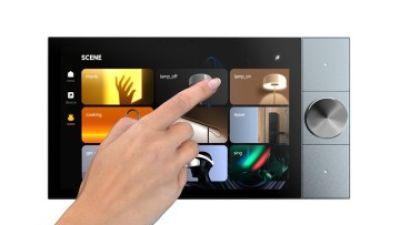
The S10 Smart Home Central Control Panel combines factory-direct quality with flexible triple-mode interaction. Users can operate connected devices through a tactile knob, physical buttons, or the responsive touch screen, with customizable controls for lighting, temperature, music, and preset scenes. Its 10-inch IPS display delivers sharp 1280×800 visuals, bringing devices, applications, and home scenes together on one centralized home screen for convenient access.

Designed for modern interiors, the panel includes an ambient light sensor that automatically adjusts screen brightness for comfortable viewing. An integrated digital album can also display selected images, adding a personal touch to the living space. Three versions are available to suit different installation needs: the standard smart control version, a background music version, and a KNX version compatible with wireless and LAN intercom systems. The S10 provides RS485, L1/L2 two-way relay, and L/N power interfaces, while the S10-M adds AUX and SPK1/SPK2 audio connections. For expanded integration, the S10-KNX features KNX, AUX, relay, Type-C, SD card, and Ethernet interfaces, supporting versatile control and connectivity throughout the home.

FAQS

Does ISO 9001 certification prove that every control panel will be high quality?

No. It mainly indicates controlled management processes. Review production records, inspection results, and corrective actions for the actual model.

Which testing requirements should a manufacturer follow?

Ask whether testing follows relevant IEC or regional requirements. Requirements can differ between markets. Confirm the exact test scope.

How can I verify a supplier’s certificates?

Check validity, coverage, model details, and the issuing organization. A polished certificate may still hide weak factory practices.

What material records should a manufacturer provide?

Request traceability for touchscreen glass, connectors, housing parts, and wiring. Records should connect materials with production batches and dates.

Which tests matter for a custom control panel?

Review electrical safety, electromagnetic compatibility, temperature, humidity, vibration, and ingress testing. Test touch accuracy and display brightness too.

Are generic test reports acceptable?

Treat them carefully. Request reports showing model numbers, test dates, conditions, and results. Generic documents need more questions.

Why should we test a pilot batch before mass production?

A pilot batch reveals wiring errors, weak button response, unstable software, and uneven brightness. Test units under realistic installation conditions.

How should a manufacturer handle failed units?

Failed units should be isolated, recorded, and analyzed. Ask for root causes and repeat-testing evidence. Quiet repairs are not enough.

What support should be included after installation?

Confirm technical contacts, response times, escalation steps, firmware support, field diagnostics, and configuration-file access. Slow replies matter.

What should a strong warranty cover?

Review coverage for screens, communication modules, power supplies, labor, shipping, and reasonable design defects. Read exclusions carefully. Small limits matter.

Conclusion

Choosing the right Custom Smart Control Panel Manufacturer requires more than comparing product prices. Start by clearly defining your control panel’s functions, operating environment, communication interfaces, display requirements, power specifications, and expected production volume. Then verify the manufacturer’s technical capabilities, including design expertise, engineering resources, software and hardware integration skills, and experience with similar applications. Evaluate the available customization options to ensure the panel can work smoothly with your existing equipment, protocols, and system architecture.

You should also review the manufacturer’s quality standards, relevant certifications, inspection procedures, and testing methods. Compare pricing carefully while considering lead times, minimum order quantities, production capacity, and the ability to support future volume increases. Finally, assess technical support, warranty terms, communication efficiency, spare parts availability, and after-sales service. A dependable long-term partner should provide consistent quality, transparent project management, responsive assistance, and continuous improvement throughout the entire product lifecycle.
Lila

Lila

Lila is a professional marketer at Shenzhen X-focus Co., Ltd. (AISpeaker), a leading Smart Home panel manufacturer and a top-tier industrial-trade integrated supplier in China. With a strong focus on research and development, Lila possesses an in-depth knowledge of the company's innovative......
Previous Custom Smart Control Panel Manufacturer: Hardware, Firmware and UI Customization Explained