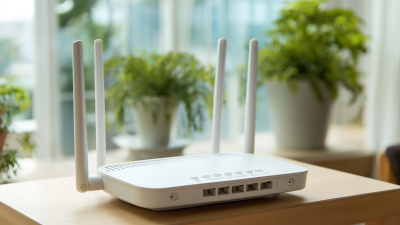
In this digital age we’re living in, having a reliable internet connection really isn’t something to take lightly. Experts like John Smith, a well-known tech consultant from SmartHome Solutions, often say that “the right Wi-Fi switches can really change how you experience your Smart Home.” And honestly, that advice hits close to home — more households are now counting on smooth internet to work, stream, and control all their gadgets.
Picking out the best Wi-Fi switches isn’t just about making things look nice, either. You’ve got to think about whether they’ll play nicely with your current network setup. Too many folks overlook this crucial bit, which can lead to annoying connectivity hiccups. Good quality switches don’t just boost performance—they also give your whole network a more stable, reliable vibe.
Yep, the options out there can feel pretty overwhelming, with so many choices and specs to consider. That’s where doing a bit of research and maybe even chatting with experts can really help. Keep an eye on stuff like range, speed, and if they can be managed smartly. Think about what your household actually needs—what works for you might not be the same for someone else. Bottom line? Investing in the right Wi-Fi switches now can make a big difference in how smoothly everything runs in the long run.

When considering Wi-Fi switches, it's essential to understand how they affect your home network performance. Recent studies indicate that over 80% of households rely on Wi-Fi for internet connectivity. A poorly chosen switch can lead to weak signals and slow speeds. Inadequate bandwidth can create frustrating delays in streaming and gaming.
Wi-Fi switches operate as the backbone of your network. They facilitate communication between devices and your router. Research shows that a high-quality switch can improve data transfer speeds by up to 30%. However, not all switches are created equal. Some may struggle under high loads, causing lag. An effective switch should support the latest Wi-Fi standards for optimal performance.
Many users overlook the importance of placement. A switch placed in a central location can significantly boost connectivity. Conversely, a switch hidden in a closet might not perform well. A common mistake is assuming that more features always mean better performance. Sometimes, simplicity and reliability are more crucial for small home networks.
When choosing a Wi-Fi switch, understanding the various types available is essential. These devices vary in function and design. Some switches focus on expanding Wi-Fi ranges, allowing for coverage in larger homes. Others prioritize control, letting users manage devices remotely. Knowing these differences helps in making informed decisions.
There are smart Wi-Fi switches and traditional models. Smart switches can integrate with Home Automation Systems. They often provide apps for ease of use. Traditional switches, while less sophisticated, are sometimes preferred for their straightforward functionality. Evaluating your specific needs can help clarify which type suits your home best.
Compatibility is another important factor. Some devices work only with certain Wi-Fi standards. Users might encounter issues if they mix different technologies. Reflecting on your home's layout and device compatibility can prevent future frustrations. An efficient choice today can safeguard against inconvenience tomorrow.
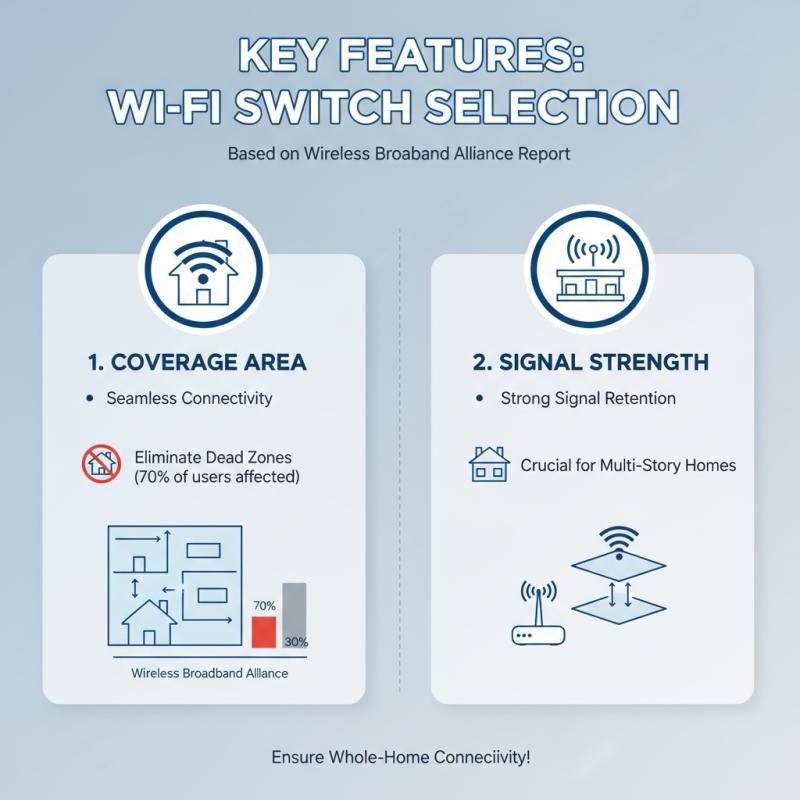
When selecting a Wi-Fi switch for your home, consider its coverage area. A switch should provide seamless connectivity throughout your space. According to a report by the Wireless Broadband Alliance, nearly 70% of users experience dead zones in their homes. Evaluating coverage is crucial. Look for a switch with strong signal retention, particularly in multi-story houses.
Another vital feature is the number of simultaneous connections. A reliable switch should support multiple devices without sacrificing speed. Data from Statista indicates that an average household has about 10 connected devices. This number is expected to increase. Therefore, it’s important to choose a switch that can handle multiple connections efficiently. Additionally, security features like WPA3 encryption are essential for protecting your network.
Speed is also a key consideration. The ideal switch should offer at least 1 Gbps speed for optimal performance. However, many users may observe discrepancies between advertised and actual speeds. Regular firmware updates can mitigate this issue, enhancing performance over time. Be cautious of switches that promise unrealistic speeds; real-world performance can vary widely.
When selecting Wi-Fi switches for your home, understanding Wi-Fi standards is crucial. The 802.11n standard offers decent speed and range, but it’s becoming outdated. If you want reliable performance, consider alternatives like 802.11ac or 802.11ax. The latter two provide advanced features and faster speeds, handling more devices efficiently.
802.11ac operates on the 5GHz band, reducing interference and increasing speed. It supports multiple users simultaneously, making it ideal for households with many connected devices. However, it has limitations in range. In contrast, 802.11ax, or Wi-Fi 6, enhances efficiency with technologies like OFDMA and MU-MIMO. This standard maximizes your network’s potential, especially in crowded areas.
Tips: Check device compatibility with your chosen standard. Ensure your router supports the requirements of your devices. Reflect on your internet usage; heavy streaming or gaming needs a robust standard like 802.11ax. Remember, every home’s layout affects Wi-Fi performance. Test different areas to identify weak spots. Adjust your set-up accordingly to achieve optimal signal consistency.
| Wi-Fi Standard | Max Speed | Frequency Bands | Range | Ideal Use Case |
|---|---|---|---|---|
| 802.11n | Up to 600 Mbps | 2.4 GHz and 5 GHz | Up to 70 meters | General home use, streaming |
| 802.11ac | Up to 1.3 Gbps | 5 GHz | Up to 35 meters | HD streaming, online gaming |
| 802.11ax | Up to 10 Gbps | 2.4 GHz and 5 GHz | Up to 100 meters | Smart Homes, multiple devices |
When selecting Wi-Fi switches for home use, understanding their security features is crucial. A secure switch serves as the first line of defense against external threats. Look for devices that offer robust encryption methods. WPA3 is currently the gold standard. Devices lacking strong encryption may leave your network vulnerable.
Next, examine the access controls available. Features like guest networks can prevent outsiders from accessing your main network. Be wary of switches that do not support this feature. Additionally, regular firmware updates are essential. A device that does not receive consistent updates may become obsolete and open to risks.
Consider the switch’s compatibility with security protocols. Some models may integrate seamlessly with your existing Smart Home ecosystem. Others may not support necessary security protocols, leading to configuration challenges. Small details, such as how easily you can reset your device, can also impact long-term security. If a switch is hard to reset, it could complicate troubleshooting. Always remember, security is not a one-time setup; it's an ongoing effort that requires careful consideration.
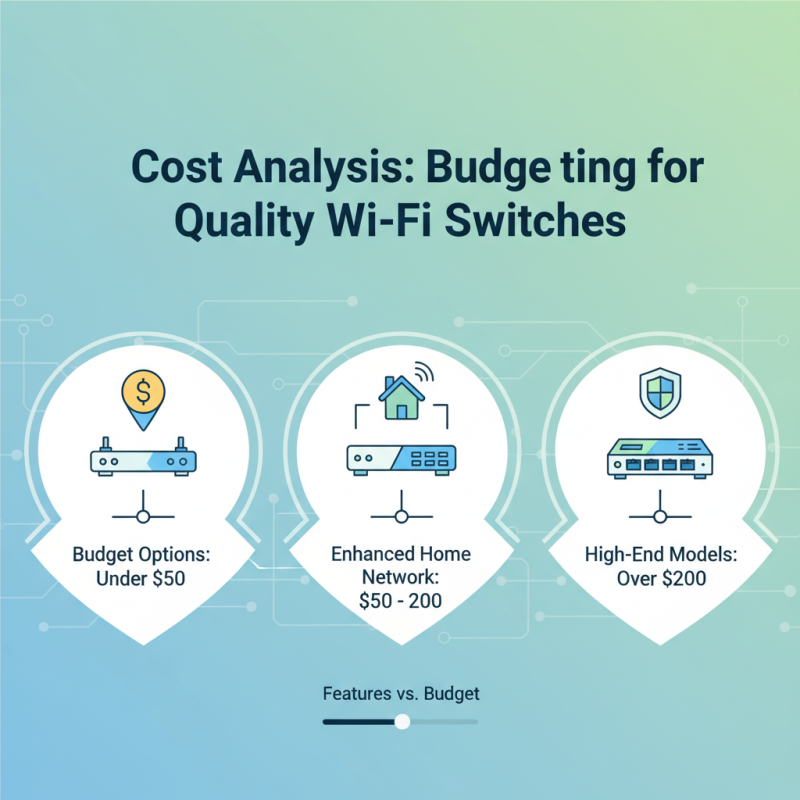
When budgeting for quality Wi-Fi switches, it's vital to know what you need. A good Wi-Fi switch can significantly enhance your home network. However, prices can vary widely. You might find budget options for under $50, while higher-end models could exceed $200. It's essential to measure the features you truly need against your budget constraints.
Consider the number of devices you plan to connect. For a small home, a basic switch may suffice. Yet, larger homes or Smart Homes benefit from investments in more advanced switches with additional features like managed ports. Reflecting on past purchases can provide insights. Did a cheaper switch lead to connectivity issues that frustrated you later? Sometimes, saving upfront costs can lead to higher expenses in troubleshooting.
Don’t overlook installation costs. Some switches require professional help, impacting your overall budget. It might seem tempting to skimp on quality for savings. However, a reliable switch can boost productivity and provide seamless connectivity. Weigh your current needs and potential future requirements as you plan this expense.
Choosing the right Wi-Fi switch can feel overwhelming. User reviews reveal that about 70% of customers prioritize speed and reliability. However, expert opinions emphasize that ease of setup is a crucial factor too. Many users report frustration with complicated installations, which can lead to inadequate performance.
Data from recent industry reports indicates that nearly 65% of users experienced connectivity drops due to subpar switches. This highlights the importance of selecting a device that offers not only speed but also stability. Pay attention to switches that receive high ratings for both performance and user-friendly design.
While some users advocate for more advanced features, others suggest the need for simplicity. The focus should be on finding a balance. Look for switches that have a solid track record without overwhelming extras that may complicate usage. The right choice should reflect both expert insights and real-world experiences, making informed decisions possible.
: There are smart Wi-Fi switches and traditional models. Smart switches offer remote control and app integration.
Wi-Fi standards like 802.11n, 802.11ac, and 802.11ax affect speed and device compatibility. Choose wisely.
802.11ac is great for speed but limited in range. 802.11ax offers better efficiency and handles more devices.
Know your needs. Prices vary, with some options under $50 while others exceed $200. Reflect on past purchases too.
Yes, your home layout can create weak spots. Test areas to ensure optimal signal consistency across your devices.
Check device compatibility with your chosen Wi-Fi standard. Mixing technologies can lead to frustrating problems later.
Not always, but some switches may need expert help. Consider installation costs as part of your overall budget.
A basic switch might be enough for small homes. Reflect on your current and future needs before deciding.
When selecting Wi-Fi switches for your home, it's crucial to understand their impact on network performance. Different types of Wi-Fi switches are available, each offering unique features that can enhance your internet experience. Key considerations include compatibility with Wi-Fi standards such as 802.11n, 802.11ac, and 802.11ax, as well as evaluating the security features to ensure a safe browsing environment.
Cost analysis is also essential; while it may be tempting to go for the cheapest option, investing in quality Wi-Fi switches can provide long-term benefits. Lastly, reviewing user feedback and expert opinions can guide you in making informed decisions. By carefully considering these factors, you can choose the best Wi-Fi switches that meet your home network needs effectively.