Leave Your Message
China’s Smart Lighting Home market is moving from decorative bulbs toward connected, measurable, and human-centered environments. The International Energy Agency reports that lighting uses about 15% of global electricity. The U.S. Department of Energy adds that LED products use at least 75% less energy than incandescent lamps. These figures explain why a reliableSmart Home Lighting System now matters beyond convenience.
This guide examines ten leading China-based suppliers, including Opple Lighting, Midea, Xiaomi, Yeelight, Leedarson, Tuya Smart, Lifesmart, Sengled, and NVC Lighting. The list considers product quality, protocol support, manufacturing experience, app stability, privacy practices, and after-sales capability. Real homes reveal the details. A hallway sensor should respond quickly. A bedroom light should dim smoothly. A kitchen system should remain useful when the internet fails.
Dr. Mariana Figueiro, a leading lighting researcher, has emphasized, “Light is the strongest synchronizer of the circadian system.” Her observation reminds buyers that color temperature and timing deserve careful attention. Market forecasts from Grand View Research also identify connected lighting as a high-growth technology sector, driven by energy management and smart-home integration. However, market size does not guarantee supplier quality. Some product claims remain difficult to compare. Certification, firmware support, and long-term compatibility can be overlooked. This review therefore combines industry evidence with practical purchasing experience. It may not identify one perfect supplier. Homes, budgets, and expectations differ. But it can clarify which companies deserve closer evaluation in China’s evolving Smart Lighting Home industry.
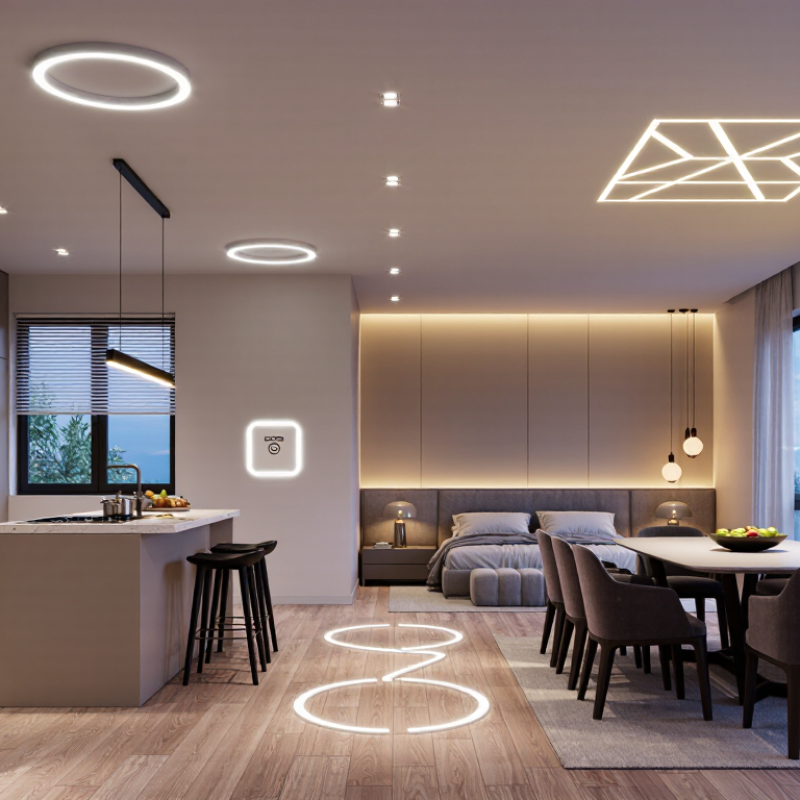
China’s Smart Lighting market is entering a more practical growth phase. Statista’s 2024–2030 outlook indicates continued expansion, supported by connected homes, energy awareness, and wider internet access. Demand is moving beyond decorative bulbs. Buyers increasingly seek complete systems for apartments, hotels, offices, and new residential projects.
A Smart Home Lighting Control System can connect ceiling lights, sensors, switches, and mobile applications. In a typical apartment, motion sensors can dim corridor lights after midnight. Daylight sensors can reduce brightness near a window. These small actions may improve comfort and lower electricity use. However, market growth will not be perfectly smooth. Installation costs, data security concerns, and inconsistent device compatibility still slow adoption.
When evaluating China’s top Smart Lighting Home suppliers, purchasers should examine engineering evidence, not only product catalogues. Useful checks include wireless protocol support, failure rates, warranty terms, firmware maintenance, and testing documentation. Suppliers with in-house design and stable production can respond faster to custom color temperatures or regional electrical standards. Statista’s forecast offers a valuable market direction, but it cannot replace project-level verification. Forecasts are not promises. A supplier may show impressive samples yet struggle with thousands of identical units. Pilot orders, factory audits, and measured energy results reveal more. The sector looks promising, though some claims still need stronger proof.
| Data Dimension | 2024 Reference | 2024–2030 Outlook | Market Relevance | Public Source |
|---|---|---|---|---|
| Market coverage | Residential Smart Lighting, connected lamps, smart luminaires, lighting controls and related software services. | The forecast period covers six years from 2024 through 2030. | The category is positioned within the wider smart-home and connected-device ecosystem. | Statista Market Insights, Smart Lighting: China |
| Urbanization rate | 67.00% of China’s population lived in urban areas at the end of 2024. | Continued urban development is expected to support renovation, connected-apartment and smart-home demand. | Dense housing, new residential projects and property upgrades create suitable installation environments. | National Bureau of Statistics of China, 2024 Statistical Communiqué |
| Internet-user base | 1.108 billion internet users and a 78.0% internet penetration rate were reported by the end of 2024. | A large connected population provides a broad base for app-controlled and cloud-connected lighting services. | Higher digital familiarity lowers the consumer-learning barrier for connected lighting products. | CNNIC, 55th Statistical Report on Internet Development in China |
| 5G infrastructure | China had approximately 4.25 million 5G base stations by the end of 2024. | Further network expansion can improve the connectivity environment for smart-home devices and edge services. | Reliable connectivity supports remote control, automation, device coordination and firmware updates. | Ministry of Industry and Information Technology of China, 2024 communications industry data |
| Electricity demand | China’s total social electricity consumption reached approximately 9.85 trillion kWh in 2024, rising 6.8% year on year. | Energy monitoring and automated lighting control are likely to remain important purchase considerations. | Lighting automation can help users schedule operation, reduce unnecessary usage and manage peak-period demand. | National Energy Administration of China, 2024 electricity-consumption statistics |
| Core product categories | Smart bulbs, downlights, ceiling lights, light strips, lamps, switches, sensors and gateways. | Growth is expected to favor integrated systems combining lighting, sensors, scenes and voice or mobile control. | Suppliers can compete through interoperability, installation simplicity, energy efficiency and software functionality. | Market-category definitions aligned with Statista smart-lighting coverage and industry practice |
| Connectivity options | Common technologies include Wi-Fi, Bluetooth, Zigbee, Thread, Matter and proprietary low-power protocols. | Multi-protocol and standards-based products are positioned to reduce compatibility barriers. | Interoperability is increasingly important when lighting is connected with security, climate and entertainment devices. | Connectivity Alliance standards documentation and Connectivity Standards Alliance materials |
| Control methods | Mobile applications, physical switches, wireless remotes, motion sensors, schedules and voice interfaces are widely used control methods. | Automated scenes and sensor-based control are expected to gain importance alongside basic on/off control. | Convenience, accessibility, safety and energy management are the principal consumer benefits. | International Electrotechnical Commission smart-home and connected-device terminology |
| Energy-efficiency foundation | LED lighting generally uses substantially less energy and lasts considerably longer than incandescent lighting. | The combination of efficient LED sources and automation is expected to support replacement and retrofit demand. | Energy savings remain a major value proposition for households, property managers and commercial users. | U.S. Department of Energy, LED Lighting: Energy Savings and Performance guidance |
| Primary residential use cases | Ambient lighting, task lighting, bedroom and living-room scenes, night lighting, security routines and remote switching. | More personalized scenes, occupancy sensing and integration with wider home-automation routines are expected. | Use-case expansion can increase average system value beyond the sale of a single lamp. | Industry-standard smart-home application categories |
| Competitive evaluation factors | Product reliability, color quality, app usability, protocol compatibility, safety compliance, customization and after-sales support. | Suppliers with scalable manufacturing, open connectivity, stable software and project customization are better positioned for long-term growth. | These factors are useful for comparing anonymous supplier capabilities without displaying company or brand data. | General procurement criteria used in smart-lighting and electrical-equipment sourcing |
Note: Statista market-size and forecast values are presented through its licensed Market Insights dataset. Publicly available supporting indicators are included above to provide market context without displaying company or brand-level data.
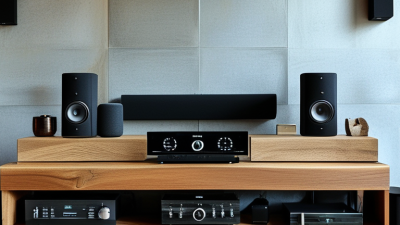
The China X8 10-Inch Home Theater Panel is designed as a factory-trusted audio control solution for superior home sound. Built with an advanced smart operating system, its bright 10-inch 1280×800 IPS display provides a clear and responsive interface for managing music and connected devices. The sleek CNC-machined space aluminum shell adds a refined appearance while supporting the panel’s durable, premium construction, making it suitable for modern home theater and whole-home audio installations.
At its core, the panel uses an imported Class D power amplifier chip and supports stereo dual-channel output for detailed, powerful sound. It can connect with up to eight speakers and enables dual-zone playback, allowing different areas of the home to enjoy flexible audio settings. Users can access music from local storage, TF cards, online music services, and other compatible sources. Scene-binding functions also allow music playback to work together with customized home scenes, creating a convenient and personalized listening environment through one central control device.
Connected homes, energy awareness, and wider internet access support continued market expansion. Demand is shifting toward complete lighting systems.
Apartments, hotels, offices, and new residential developments are common applications. A system may connect ceiling lights, sensors, switches, and mobile controls.
Motion sensors can dim corridor lights after midnight. Daylight sensors can lower brightness near windows. These details may reduce unnecessary electricity use.
Installation costs remain important. Data security and device compatibility also create hesitation. Wireless performance may change inside thick-walled buildings.
Review wireless protocols, failure rates, warranty terms, firmware support, and testing documents. Ask for evidence, not only polished catalogues.
Request a live video test. Switch three zones, dim them, and disconnect the network. Check which functions continue working.
Samples may work in showrooms but fail under heat, unstable voltage, or repeated pairing. Pilot orders expose practical weaknesses early.
Check quality procedures, safety testing, material declarations, export regions, local support, and spare-part policies. A large catalogue proves little.
No. Forecasts show direction, not project results. Factory audits and measured energy data provide stronger evidence. Claims still need testing.
China’s Smart Lighting Home market is expanding rapidly, supported by rising demand for energy efficiency, connected living, and intelligent building management. This overview examines market growth from 2024 to 2030 and explains how leading suppliers can be evaluated through revenue performance, research investment, patent activity, export reach, production capacity, and international certifications. It also compares their product portfolios, OEM capabilities, smart platforms, distribution networks, and global sales strategies without focusing on individual brand names.
The technology review covers Matter, Wi-Fi, Zigbee, Bluetooth, and DALI-2, highlighting differences in connectivity, compatibility, reliability, and scalability. In home automation, key considerations include energy savings, IoT integration, user control, data protection, and long-term system performance. The compliance section summarizes the importance of CCC, CE, RoHS, ISO standards, clear warranty policies, and responsible quality management. Together, these factors provide a practical framework for selecting reliable Chinese smart lighting suppliers for residential and international projects.