Leave Your Message
0%

In today’s fast-changing world of audio tech, it’s no surprise that Whole House Wireless Speakers are becoming a go-to for many homeowners. If you've wandered around a home tech store, you’ve probably noticed how these speakers are everywhere. Mark Thompson, from Audio Innovations, puts it simply: “The best speakers just blend into your daily life and make every moment a little better.” That really shows how important these speakers are when it comes to creating that immersive, cozy home vibe.

When you're thinking about picking out Whole House Wireless Speakers, a few things should be on your mind—sound quality, how they look, and how easily they connect. Sure, different brands out there have some pretty cool options, but honestly, it can get a bit overwhelming trying to decide which one suits you best. The key is to find something that matches your lifestyle and personal style.

A lot of speakers might catch your eye because they look sleek, but it’s just as crucial to pay attention to sound performance and durability. After all, you want something that’s reliable and built to last. If you invest in good quality, it can seriously change your home experience for the better. Remember, it’s not just about throwing some sound into the space — it’s really about creating a warm, inviting atmosphere that makes your entire home feel a little more special.
Best Whole House Wireless Speakers for 2026 What to Buy?

Best Whole House Wireless Speakers: An Overview of Key Features

When considering the best Whole House Wireless Speakers, several key features stand out. Sound quality remains paramount for discerning listeners. Data from various industry reports show that consumers prioritize clarity and depth in audio. Advanced technologies like spatial audio enhance the listening experience. Many users express a desire for multi-room capabilities, allowing seamless integration throughout their homes.

Another crucial aspect is connectivity. Whole Home Wireless Speakersshould support various streaming options, including Wi-Fi and Bluetooth. Industry studies indicate that 75% of consumers want devices that connect easily with Smart Home Systems. Voice control integration is also a growing demand, allowing users to command their audio experience effortlessly. However, compatibility issues can sometimes arise, complicating these integrations.

Design plays a significant role as well. Aesthetic appeal can influence purchasing decisions. Many consumers prefer sleek, unobtrusive designs that blend with home decor. Some reports suggest that about 60% of buyers consider design equally important as sound quality. However, it’s essential to recognize that not all products harmonize form and function effectively. Users often encounter products that fail to meet their visual expectations, leading to dissatisfaction in their overall experience with Whole Home Wireless Speakers.

Market Trends: Growth Projections for Whole House Wireless Speakers in 2026

The market for Whole House Wireless Speakers is expanding rapidly. By 2026, experts predict significant growth in demand. More households are embracing smart technology. This shift aligns with a growing preference for seamless audio experiences throughout homes.

Consumers look for convenience and quality. Whole house systems offer easy control through apps and voice commands. They also integrate with other Smart Devices. This interconnectivity enhances the user experience. However, not all products deliver the same level of reliability. Some may struggle with connectivity or sound quality. Users often find themselves frustrated by these inconsistencies.

Trends show that people want versatile designs. Speakers that blend into home decor are becoming popular. This aesthetic appeal is crucial for many buyers. Yet, users may overlook how performance can vary by brand and model. It’s essential to research before making a purchase. Comprehensive reviews and real user feedback help guide choices. The market is promising, but careful consideration is key in this evolving landscape.

Sound Quality Metrics: Understanding Audio Performance Standards

When evaluating the best Whole House Wireless Speakers for 2026, understanding sound quality metrics is essential. These metrics assess audio performance to ensure that your listening experience is optimal. Key standards include frequency response, total harmonic distortion (THD), and signal-to-noise ratio (SNR). A frequency response of 20Hz to 20kHz captures the full range of human hearing, while a low THD rating (below 1%) indicates clearer sound reproduction.

Many reports highlight the importance of SNR, which should ideally exceed 90 dB for a clean audio output. In the realm of Bluetooth Speakers Multi Room systems, maintaining high audio performance across various zones is crucial. This requires advanced technology for synchronizing audio, which can sometimes lead to latency issues. Users may notice slight delays between rooms, raising questions about overall performance and effectiveness.

Moreover, while seeking high-quality audio, you might encounter varying results in real-world settings versus ideal conditions. Factors like room acoustics and speaker placement can significantly affect sound quality. Choosing the right wireless speakers involves balancing specifications with practical considerations. This nuanced understanding of audio performance requires close evaluation and continuous learning for the best listening experience.

Best Whole House Wireless Speakers for 2026

Model Audio Quality Rating Battery Life (hours) Connectivity Options Price Range (USD)
Model A 9.0/10 12 Wi-Fi, Bluetooth, AUX $300 - $400
Model B 8.5/10 10 Wi-Fi, Bluetooth $250 - $350
Model C 8.0/10 15 Bluetooth, AUX $200 - $300
Model D 9.5/10 18 Wi-Fi, Bluetooth, AUX, Ethernet $350 - $450

Connectivity Options: Bluetooth vs. Wi-Fi in Wireless Speaker Systems

Best Whole House Wireless Speakers for 2026 What to Buy?

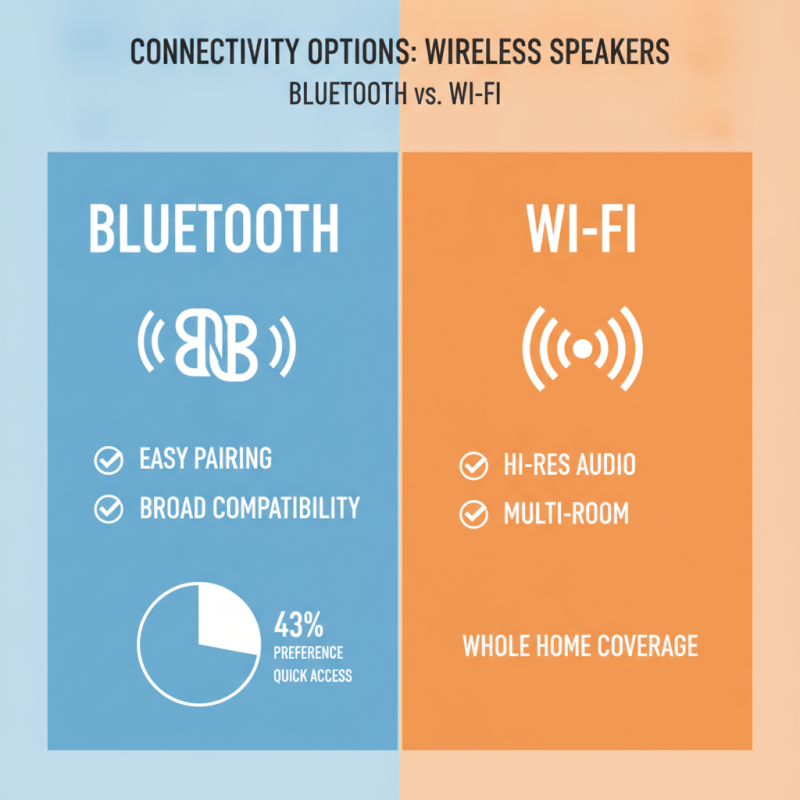
When choosing wireless speakers, connectivity options are a critical consideration. Bluetooth and Wi-Fi present unique advantages for audio systems. Bluetooth boasts convenience. It easily connects to most devices without complex setup. A report from Statista indicates that nearly 43% of wireless speaker users prefer Bluetooth for its quick pairing capability. This instant access suits casual listeners wanting simplicity.

On the other hand, Wi-Fi offers enhanced sound quality. It supports higher bit rates than Bluetooth. A survey by the Consumer Electronics Association revealed that 67% of serious audiophiles choose Wi-Fi for its superior audio fidelity. Additionally, Wi-Fi-enabled speakers can connect multiple devices. This expands listening options across various rooms, enabling synchronous multi-room audio.

However, there are drawbacks to each technology. Bluetooth typically has a limited range, often less than 30 feet. Wi-Fi can introduce latency, especially when streaming from different sources. Users have expressed frustration with connectivity issues in these cases. It’s essential to weigh these factors when selecting a whole-house speaker system. Understanding individual needs can lead to a satisfying choice, balancing quality and convenience effectively.

User Experience: Integration with Smart Home Devices in 2026

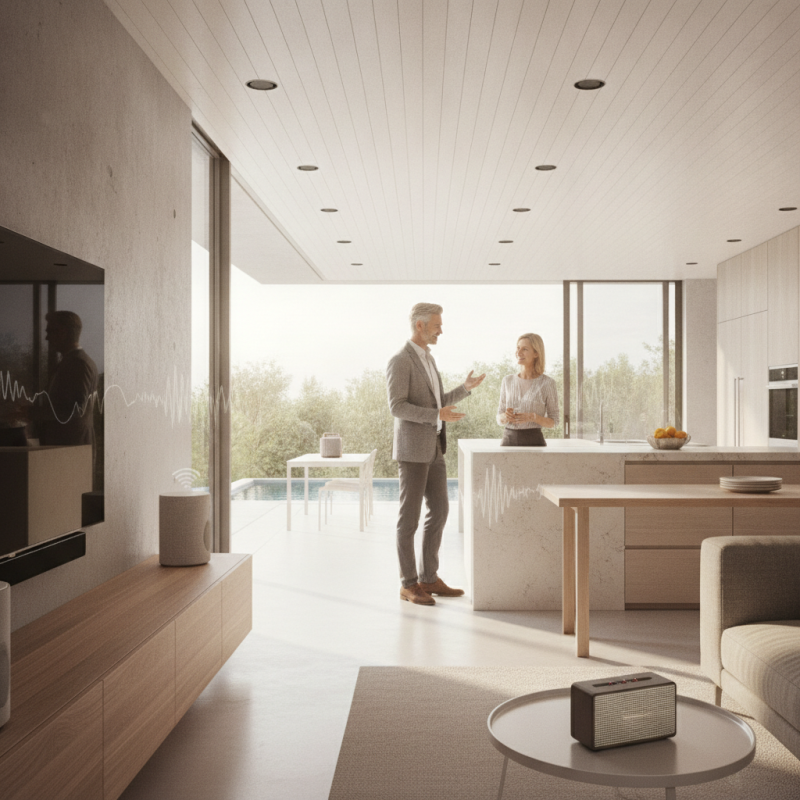
In 2026, the integration of whole house wireless speakers with Smart Home devices has evolved significantly. Recent reports indicate that nearly 75% of Smart Home users prefer seamless connectivity with audio systems. Homeowners now expect their speakers to sync effortlessly with various smart devices, from thermostats to security systems. This demand highlights a shift towards a more interconnected living experience, where audio enhances daily life.

User experience is often influenced by the ease of setup and functionality. Complex installations can lead to frustration. A survey by a leading tech research firm showed that 68% of users would abandon a smart speaker due to poor integration. This reinforces the need for manufacturers to focus on user-friendly interfaces. Compatibility issues may arise. Devices from different brands can present challenges, forcing users to navigate through clunky apps or ineffective voice commands.

Moreover, the sound quality must not be overlooked. A robust system should deliver clear audio across different rooms. The acoustic design of these speakers can enhance the overall home experience. Yet, many consumers are unaware of how different materials or placement affect sound. Educating users about these factors remains crucial. As more people invest in smart homes, ensuring a smooth audio experience is vital to maintaining customer loyalty.

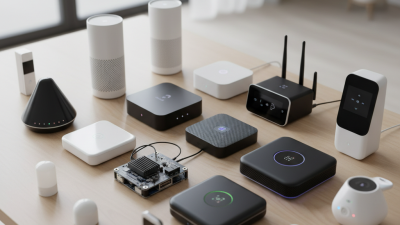
Integration of Wireless Speakers with Smart Home Devices in 2026

Top Brands to Watch: Industry Leaders in Whole House Wireless Audio

In 2026, the world of audio technology continues to evolve. Whole house wireless speakers are becoming essential for modern living. They provide flexibility and convenience, allowing users to enjoy music throughout their homes without the hassle of cables. However, selecting the right speakers can be overwhelming. Many brands claim superiority, but not all deliver quality sound and reliable performance.

Top brands in the industry focus on innovation and sound clarity. Their products often feature advanced technology that ensures seamless connectivity and multi-room functionality. These companies prioritize user experience, designing interfaces that are easy to navigate. While some speakers boast impressive specifications, others lack in build quality and durability. It's crucial to balance performance with reliability when choosing a system.

Listening environment matters as well. Acoustics can change drastically from one room to another. Many users discover that what sounds great in one space may not perform as well in another. Experimentation is key. Testing various layouts can lead to an optimal setup. Ultimately, the best Whole House Sound System Wireless is one that fits your unique needs and enhances your daily life.

Consumer Insights: Factors Influencing Buying Decisions in 2026

As the market for home audio systems evolves, consumer preferences become essential in understanding what drives purchases. According to a recent market report, 78% of consumers consider sound quality the most vital factor when buying a Whole House Wireless Speaker System. Clarity and depth of sound can significantly influence overall satisfaction. In 2026, innovative audio technologies are expected to shape consumer choices further. Features like multi-room capability and integration with smart home systems attract attention.

Another critical factor influencing buying decisions is design. Aesthetic appeal ranks high among younger consumers. About 65% of buyers prefer sleek, modern designs that fit well in contemporary homes. Color options also play a role. Many consumers view their speaker systems as decor. They want systems that enhance their living spaces. Yet, a review of consumer feedback shows a disconnect between visual appeal and actual performance.

Price remains a significant barrier for some. Nearly 60% of consumers express concern about affordability when considering a Whole House Wireless Speaker System. Brands must find ways to balance affordability with high-end features. Overall, while factors like sound quality and design are crucial, potential buyers often reassess which features align with their specific needs and budgets.

FAQS

: What percentage of smart home users prefer seamless connectivity with audio systems?

: Nearly 75% of smart home users prefer seamless connectivity.

What is a common issue users face when integrating smart speakers?

Users often encounter compatibility issues between devices from different brands.

What percentage of users would abandon a smart speaker due to poor integration?

A survey found that 68% of users would abandon a smart speaker due to this issue.

What factor is considered most vital by consumers when purchasing audio systems?

Sound quality is the most vital factor for 78% of consumers.

Why is design important to consumers when buying audio systems?

Aesthetic appeal matters, especially for younger consumers who prefer modern designs.

How do many consumers view their speaker systems in terms of decor?

Many view their audio systems as decor that enhances their living spaces.

What barrier to purchase do nearly 60% of consumers express concern about?

Price is a significant barrier for many consumers when considering these systems.

What aspect of sound do consumers often overlook regarding their speaker systems?

Many consumers are unaware of how placement affects sound quality.

Why is educating users about sound factors crucial?

Educating users can enhance overall satisfaction and improve their home experience.

What disconnect exists between consumer feedback and actual performance?

There's a gap between visual appeal and the actual performance of audio systems.

Conclusion

The article "Best Whole House Wireless Speakers for 2026 What to Buy?" provides a comprehensive overview of the key features and trends shaping the market for whole house wireless speakers. As demand grows, projections indicate significant advancements in sound quality and connectivity options, particularly between Bluetooth and Wi-Fi technologies. The evolving landscape emphasizes the importance of audio performance standards, ensuring that users enjoy high fidelity across their homes.

Additionally, the article highlights the increasing integration of whole house wireless speakers with smart home devices, enhancing user experience in 2026. Consumer insights reveal the factors that influence buying decisions, showcasing how technological innovations are creating more seamless and convenient audio solutions. Overall, this overview serves as a guide for consumers looking to invest in whole house wireless speakers that balance quality, connectivity, and smart integration.


Emily

Emily

Emily is a dedicated marketing professional at Shenzhen X-focus Co., Ltd. (AISpeaker), a leading manufacturer of smart home panels in China. With her extensive knowledge of the company's product offerings, including smart central control panels, background music panels, and intercom systems, she......
Previous Top 10 Intelligent Devices You Must Know for Global Sourcing?